IB History books 2026: Complete guide for students and teachers
Choosing the right IB History books is one of the most consequential academic decisions an IB Diploma student will make. Unlike subjects with a single, universally adopted textbook, IB History operates on a modular syllabus where schools select different prescribed subjects, world history topics, and regional options. This means the “best” book depends entirely on what your school teaches and what your personal learning style demands.
At Times Edu, we have guided hundreds of students through the IB Diploma Programme since 2018, and the confusion around textbook selection comes up in nearly every first consultation we hold. This guide cuts through that confusion with clear, strategic advice.
- Best IB History books
- Oxford and Hodder IB History textbooks reviewed and compared
- IB History study guides vs full textbooks: what do you actually need?
- Top IB History books covering prescribed subjects and world history topics
- How to use an IB History book to master source analysis and essay technique
- Where to buy IB History books at the best price online
- Free IB History resources vs investing in an authorised study book
- Frequently asked questions
Best IB History books
The IB History [1] syllabus is structured across three distinct assessment components: Paper 1 (Prescribed Subjects, source-based), Paper 2 (World History Topics, essay-based), and Paper 3 (HL Regional Options, extended essay-based). Because the syllabus is intentionally broad and flexible, no single IB History textbook covers everything.
Publishers respond to this reality by releasing individual, topic-specific volumes rather than one comprehensive book. This is a detail that consistently catches new students off guard.
The three dominant publishers in this space are Oxford University Press, Hodder Education, and Cambridge University Press. Each series has a distinct pedagogical philosophy, and understanding those differences will help you make a sharper investment decision.
| Publisher | Series Name | Best Suited For |
|---|---|---|
| Oxford University Press | Oxford IB Prepared: History | Paper 1 source analysis, IB-authorised content |
| Hodder Education | Access to History for the IB Diploma | Paper 2 and Paper 3 essay writing |
| Cambridge University Press | Cambridge IB Diploma History | Internal Assessment, historiography, analytical depth |
One critical detail often overlooked is that “authorised” does not mean exclusive. The IBO endorses materials from multiple publishers, so an Oxford IB History book and a Hodder IB History book can both be valid for the same student’s toolkit.
>>> Read more: IB books 2026: The complete guide to study materials for the IB Diploma
Oxford and Hodder IB History textbooks reviewed and compared
Oxford IB Prepared: History
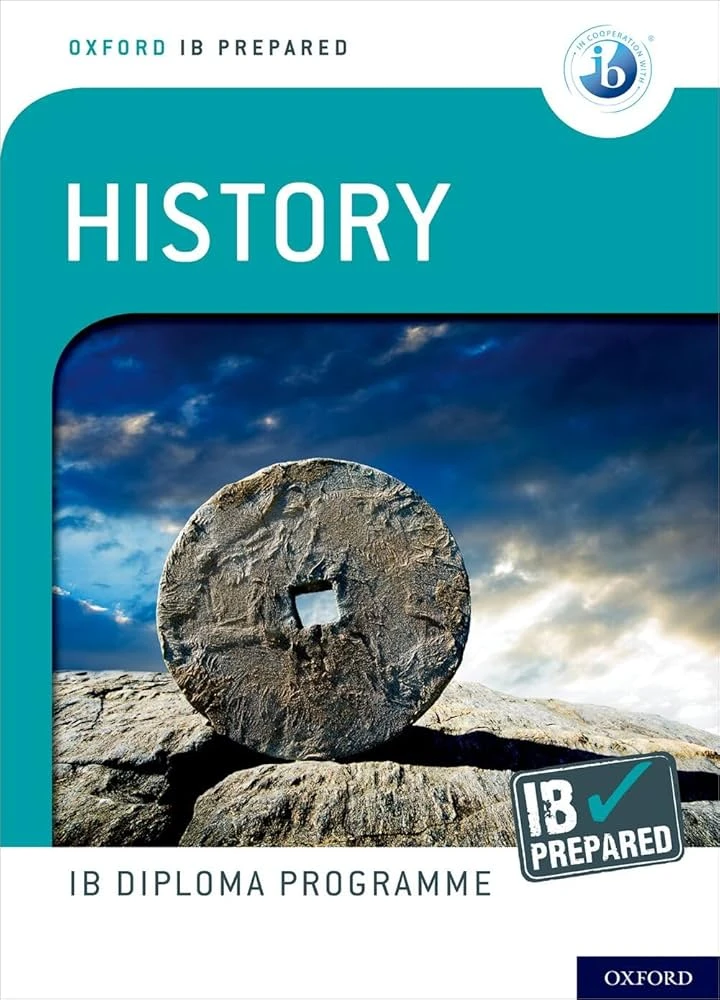
The Oxford IB History series is developed in direct partnership with the IB organisation itself, which gives it a structural alignment with mark schemes that few competitors can match. These books excel at Paper 1 preparation because they provide an exceptional variety of primary sources, including official treaties, political cartoons, and propaganda materials.
The series teaches source analysis using the OPVL framework (Origin, Purpose, Value, Limitation), which is the backbone of Paper 1 marking. Students who struggle to articulate source limitations in analytical rather than descriptive language will find the Oxford series particularly corrective.
A common mistake we see is students treating OPVL as a mechanical checklist rather than an integrated analytical argument. The Oxford IB Prepared books model how to weave OPVL naturally into a response, which is what examiners actually reward.
Hodder Education: Access to History for the IB Diploma
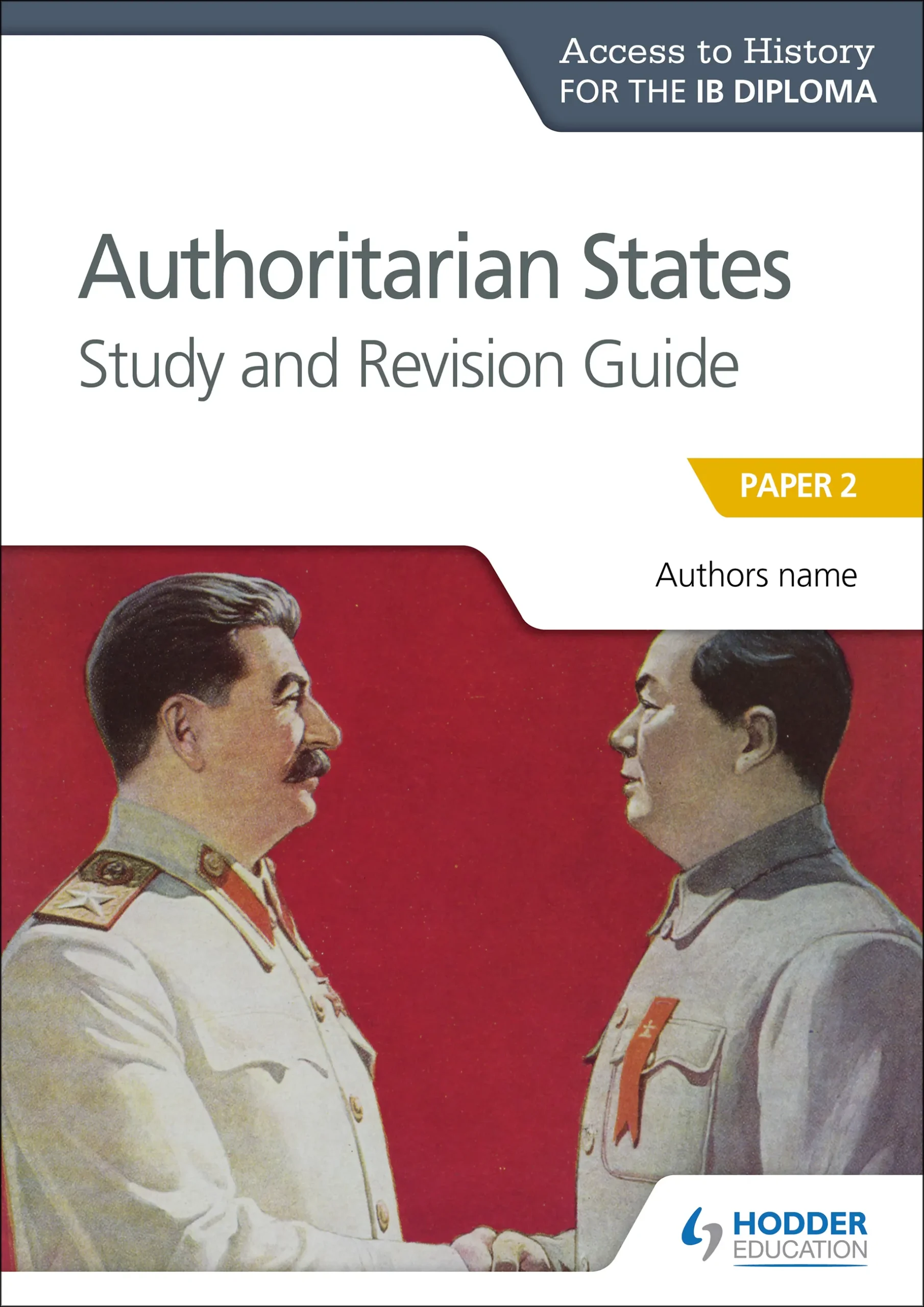
The Hodder IB History series takes a notably different approach. Its narrative storytelling style makes complex political history far more digestible, especially for students who find dense, fact-heavy prose difficult to engage with over long study sessions.
Each Hodder volume includes margin-based “Key Terms” boxes, conceptual check questions, and structured timelines that help students consolidate knowledge before attempting essay responses. In our experience working with international students whose first language is not English, the Hodder series is consistently easier to read and retain.
Where the Hodder series genuinely stands out is its essay guidance. The explicit instruction on how to structure Paper 2 and Paper 3 evaluations, including how to build a historical argument that goes beyond narration, is among the clearest available from any major publisher.
Cambridge IB Diploma History Series
The Cambridge series is the most academically demanding of the three. Its built-in historiography sections, which appear in every chapter, introduce students to conflicting schools of historical interpretation. This is critical for HL students aiming for high marks on the Historical Investigation (Internal Assessment).
Students who plan to study History, Political Science, or International Relations at university will benefit most from the Cambridge approach. It trains thinking habits that undergraduate programmes reward.
>>> Read more: IB Stress Management 2026: How to Survive IA and EE Deadlines Without Burning Out
IB History study guides vs full textbooks: what do you actually need?
This is one of the most practical questions students ask, and the honest answer is that most students need both, but for different purposes and at different stages.
A full IB History textbook provides the conceptual depth, factual breadth, and analytical frameworks necessary to actually understand and engage with the material. A revision guide, by contrast, condenses that knowledge into examination-ready summaries, key argument structures, and timed practice frameworks.
Drawing on years of experience at Times Edu, we recommend the following approach:
- Use a full IB History SL HL textbook as your primary resource from the beginning of the course.
- Introduce a dedicated IB History revision guide approximately eight to twelve weeks before your final examinations.
- Use past papers alongside both resources throughout the entire course, not just at the end.
A common mistake we see is students relying exclusively on revision guides from the start. These condensed materials assume prior conceptual understanding. Without that foundation, students who rely only on guides tend to produce superficial examination answers that examiners identify quickly.
The Revise IB series and the Oxford IB Skills and Practice books serve well as supplementary revision tools. They are not substitutes for a full IB Diploma History book.
>>> Read more: IB Command Words Explained: 25 Verbs Examiners Use (A-Z Guide)
Top IB History books covering prescribed subjects and world history topics
Because the IB History syllabus is topic-specific, your first step is always to confirm which topics your school has selected. The following breakdown covers the most widely taught topics and the books most commonly recommended for each.
Paper 1: Prescribed Subjects
| Prescribed Subject | Recommended Book |
|---|---|
| The Move to Global War | Oxford IB Prepared or Hodder Access to History |
| Rights and Protest | Hodder Access to History for the IB Diploma |
| Conquest and its Impact | Cambridge IB Diploma History Series |
Paper 2: World History Topics
| World History Topic | Recommended Book |
|---|---|
| Authoritarian States (20th Century) | Hodder or Oxford IB Prepared |
| Causes and Effects of 20th-Century Wars | Hodder Access to History |
| The Cold War: Superpower Tensions and Rivalries | Oxford IB Prepared or Cambridge series |
The Cold War 20th century IB book is consistently one of the most-requested titles we handle at Times Edu. Both the Oxford and Hodder editions are strong, but Oxford’s source bank gives it an edge for Paper 1 integration, while Hodder’s narrative depth supports stronger Paper 2 essay construction.
Paper 3: HL Regional Options
Paper 3 demands a level of regional depth that SL students are not assessed on. Dedicated volumes exist for History of the Americas, History of Europe, History of Asia and Oceania, and History of Africa and the Middle East. The Cambridge series is particularly well-suited to HL students here because of its historiographical rigour.
One critical detail often overlooked is that HL students attempting Paper 3 without a dedicated regional option book are operating at a serious disadvantage. A general world history overview simply does not provide the regional specificity that Paper 3 marking criteria demand.
>>> Read more: How to Choose IB Subjects for Your Major 2026: A Smart Guide to Picking the Right Combination
How to use an IB History book to master source analysis and essay technique
Owning the right book is only half the equation. How you use it determines whether that investment translates into examination marks.
For IB History Paper 1 source analysis:
- Read the chapter content first to establish contextual understanding.
- Work through the book’s source exercises without looking at the model answers.
- Compare your response to the model answer, identifying where your OPVL analysis was descriptive rather than evaluative.
- Practice articulating how the origin of a source directly shapes its value and its limitations simultaneously.
- Time your responses. Paper 1 is a one-hour examination with strict time pressure.
For essay technique in Paper 2 and Paper 3:
- Study the essay frameworks provided in Hodder or Oxford volumes before writing a single practice essay.
- Build a habit of writing thesis statements that make a clear, defensible historical argument, not a topic description.
- Use the historiography sections in Cambridge books to identify at least two competing historical interpretations for every major topic you study.
- Practice writing introductions and conclusions separately before attempting full timed essays.
In our experience working with international students preparing for IB History, the gap between a Band 4 and a Band 6 essay response almost always comes down to the quality of the argument, not the volume of historical knowledge. A book that teaches you how historians argue is more valuable than one that simply delivers more facts.
>>> Read more: IB DP Term Checklist 2026: A Practical Guide to Stay Organized Throughout the School Year
Where to buy IB History books at the best price online
Students and parents frequently ask where to buy IB History book collections without paying retail price for every individual volume. This is a legitimate concern given that a full set of topic-specific books can amount to a significant total cost.
Recommended purchasing options:
- Publisher websites directly: Oxford University Press and Hodder Education both offer digital and print editions. Digital editions are typically cheaper and immediately accessible.
- Amazon and Book Depository: Both platforms carry the full IB History textbook range and frequently offer competitive pricing on international shipping.
- School library loans: Many IB World Schools maintain complete library sets of prescribed subject and world history topic books. Always check your school’s resources before purchasing.
- Second-hand markets: Facebook Marketplace, local IB student groups, and platforms like AbeBooks often have previous students selling lightly used copies at significant discounts.
- IB community forums: Reddit’s r/IBO community and various Discord servers for IB students regularly circulate PDF shares. While these should be used ethically and within copyright boundaries, they represent a practical reality of the student community.
One practical caution: always verify that the edition you are purchasing matches the current IB History syllabus. The IB updated its History syllabus for first examinations in 2017, and books published before that year may not align with current assessment objectives.
>>> Read more: The Ultimate IB Diploma Program (IBDP) Guide 2026
Free IB History resources vs investing in an authorised study book
Free resources are abundant in the IB History space. The IBO publishes specimen papers, subject guides, and mark schemes on its official website. YouTube channels, student-compiled notes, and educational blogs provide additional layers of support.
The real question is not whether free resources exist, but whether they are sufficient for a student aiming at a 6 or 7.
Drawing on years of experience at Times Edu, the students who score highest consistently combine two elements: a strong, authorised IB Diploma History book that builds genuine conceptual understanding, and targeted support that holds them accountable to examination standards throughout the course.
Free resources have meaningful limitations. They are often inconsistently structured, lack the pedagogical sequencing that a well-designed textbook provides, and rarely include the model answers and examiner commentary that teach students how to self-correct.
For a student managing self-study IB History outside of a traditional school environment, an authorised IB History book is not optional. It is the structural backbone of the entire learning process. Self-study without a quality textbook typically results in surface-level factual knowledge and an inability to meet the analytical demands of Paper 2 and Paper 3.
If budget is genuinely constrained, prioritise the Hodder Access to History book for your Paper 2 topic first, then source a free past paper pack from the IBO website. This combination gives you the strongest return on a limited investment.
>>> Read more: IB Tutor 2026: How to Choose the Right Tutor for Better Grades and Less Stress
Frequently asked questions
Which IB History textbook is officially authorised by the IBO?
Do I need separate IB History books for prescribed subjects and world history topics?
What is the best IB History revision guide for last-minute exam preparation?
Which IB History book covers Paper 1 source analysis skills most effectively?
Do SL and HL students need different IB History books?
Are older editions of IB History books valid for the current IB History syllabus?
Which IB History book is best suited for self-study IB Diploma students?
Conclusion
Choosing the right IB History book is a strategic decision that shapes how effectively a student can meet the demanding analytical requirements of the IB Diploma Programme History course. The Oxford IB History series leads for Paper 1 source analysis, the Hodder IB History series excels in essay technique and accessibility, and the Cambridge series provides the historiographical depth that high-achieving HL students need for their Internal Assessment and Paper 3.
No single book covers everything. Students must build a targeted collection that matches their specific prescribed subjects, world history topics, and regional option where applicable. Combining a strong primary textbook with a focused revision guide, past papers, and structured essay feedback creates the most reliable pathway to a 6 or 7.
At Times Edu, our academic consultants help students design exactly this kind of personalised study architecture, matching each student’s school syllabus, learning style, and university ambitions to the right resources and the right support structure. If you or your child is navigating the IB Diploma and wants a clear, strategic roadmap built around your actual syllabus choices, our team is ready to help you build that plan from the ground up.
Resources: