IB Economics books 2026: Complete guide for students and teachers
A comprehensive IB Economics books helps students understand economic theory, apply concepts to real-world contexts, and prepare for both written responses and HL quantitative requirements. This guide compares the authorised resources from Cambridge University Press, Oxford University Press, and Hodder Education, identifies which books suit different learning styles, and explains how to combine a full SL and HL textbook with revision guides and carefully selected online resources for effective exam preparation.
- Best IB Economics books
- Oxford and Hodder IB Economics textbooks reviewed and compared
- IB Economics study guides vs full textbooks: Which do you actually need?
- Top IB Economics books for SL and HL students covering all four units
- How to use an IB Economics book to master diagrams, essays and Internal Assessment
- Where to buy IB Economics books at the best price online
- Free IB Economics resources vs investing in an authorised study book
- Frequently asked questions
Best IB Economics books
The IB Diploma Programme Economics course [1] is structured around four compulsory units: Introduction to Economics, Microeconomics, Macroeconomics, and The Global Economy. Any IB Economics textbook you invest in must cover all four units with depth appropriate to your level, whether SL or HL.
Three publishers dominate the market for authorised and widely recommended resources: Cambridge University Press, Oxford University Press, and Hodder Education. Each takes a meaningfully different pedagogical approach, and understanding those differences upfront will save you significant time and money.
A common mistake we see students make is purchasing whichever book appears first in a search result without checking the edition year. The IB updated its Economics syllabus framework with a stronger emphasis on real-world global challenges, sustainability, and evaluation skills. Older editions simply do not reflect these priorities in the way examiners expect.
>>> Read more: IB books 2026: The complete guide to study materials for the IB Diploma
Oxford and Hodder IB Economics textbooks reviewed and compared
Economics for the IB Diploma by Ellie Tragakes (Cambridge University Press)
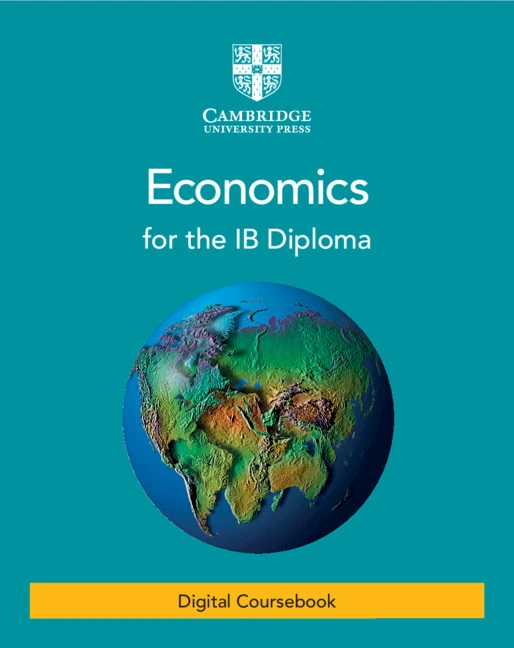
This is widely regarded as the definitive IB Economics textbook among experienced IB educators globally. Tragakes writes with exceptional clarity on abstract economic models, including market structures, market failure, and the full range of macroeconomic policies.
One critical detail often overlooked is that this book integrates core IB themes such as sustainability, equity, and efficiency directly into each chapter rather than treating them as supplementary sections. This mirrors how the IB marking scheme actually rewards higher-band responses. Digital access to step-by-step mathematical tools and interactive practice exercises is included with purchase.
Oxford IB Diploma Programme: Economics Course Companion by Blink and Dorton
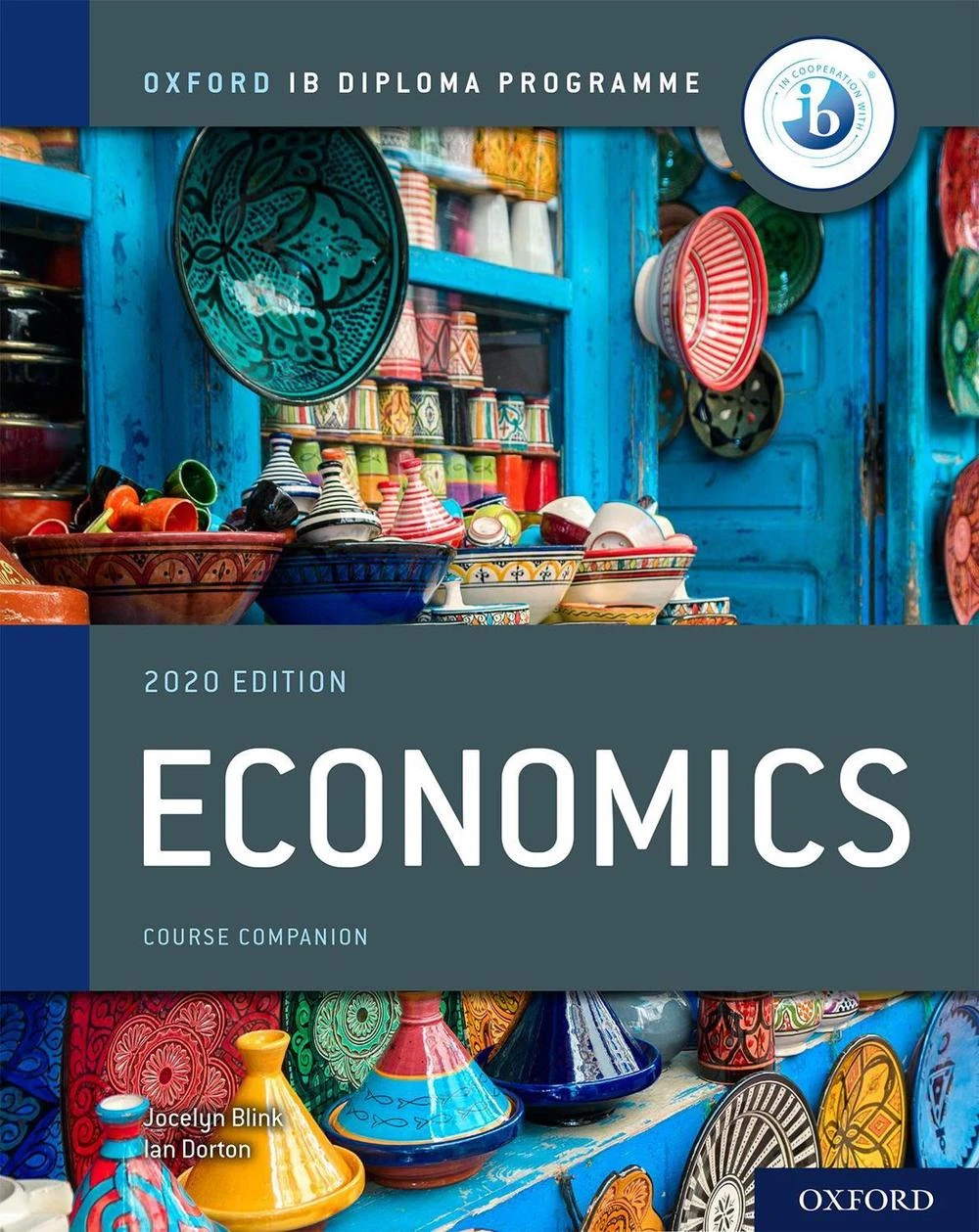
The Blink Dorton IB Economics title is the only major textbook developed in direct cooperation with the IB organisation itself. Its enquiry-led methodology uses diverse international case studies, making it especially strong for students who struggle to connect abstract theory to real economic events.
The Oxford IB Economics coursebook is also outstanding for Theory of Knowledge connections, which appear on the cover page of every IB Economics examination and reward students who can articulate the epistemological limits of economic models. For students aiming to build a study-abroad profile that signals genuine intellectual engagement, this dimension matters.
Economics for the IB Diploma by Paul Hoang (Hodder Education)
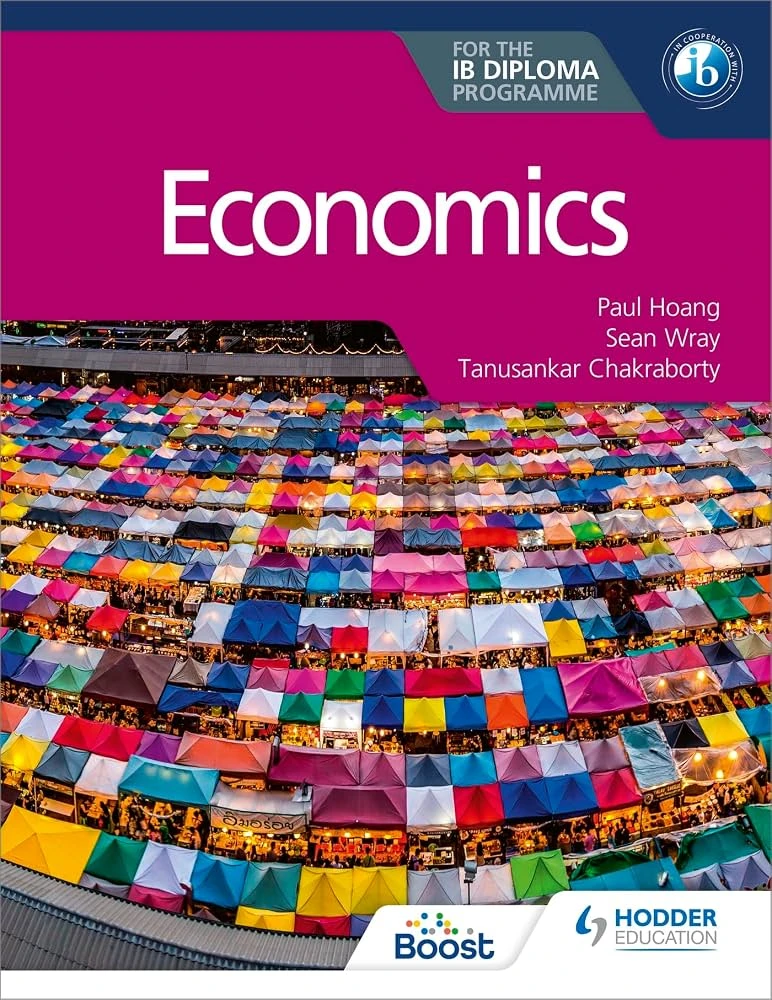
The Hodder IB Economics textbook by Paul Hoang is the most practical and visually structured option available. Its layout is designed for efficient revision, with summary diagrams on virtually every spread, revision checklists at the end of each unit, and clear step-by-step breakdowns of quantitative methods.
In our experience working with international students who have limited contact hours or are preparing late in the academic year, the Hoang text consistently proves the fastest route to consolidating knowledge. Its HL Paper 3 support, covering policy recommendation tasks and calculation drills, is more detailed and accessible than any competing title.
Side-by-side comparison
| Feature | Tragakes (Cambridge) | Blink and Dorton (Oxford) | Hoang (Hodder) |
|---|---|---|---|
| Authorised by IB | Yes | Yes (co-developed) | Yes |
| SL and HL coverage | Full | Full | Full |
| Diagram quality | High | High | Very high |
| Case study depth | Strong | Excellent | Moderate |
| HL Paper 3 support | Moderate | Moderate | Excellent |
| TOK integration | Good | Excellent | Basic |
| Best for | Deep conceptual study | Enquiry and case study | Revision and HL calculations |
| Self-study suitability | Very high | High | Very high |
>>> Read more: IB Past Paper Mistake Library 2026: Turn Your Errors Into Your Biggest Mark Booster
IB Economics study guides vs full textbooks: Which do you actually need?
A full IB Economics SL HL textbook runs between 600 and 800 pages. An IB Economics revision guide typically covers the same syllabus content in 150 to 250 pages, with condensed notes, key diagrams, and practice questions. The question is not which one is better in isolation. It is which one you need at which stage.
For students in their first year of the IB Diploma, a full textbook is non-negotiable. You need the extended explanations, the worked examples, and the case studies to build genuine understanding of how microeconomics and macroeconomics interact within the IB framework. Revision guides used at this stage often produce superficial knowledge that collapses under the evaluation demands of Paper 1 and Paper 2.
For students entering their final semester before exams, an IB Economics revision guide becomes an essential second resource. The Oxford IB Economics Study Guide and the Cambridge Revision Guide both provide strong structured summaries. They are most effective when used alongside a full textbook, not as a replacement.
>>> Read more: IB Economics 10-Mark vs 15-Mark Questions 2026: Structure, Timing & Mark Scheme Breakdown
Top IB Economics books for SL and HL students covering all four units
Every authorised IB Economics textbook covers the same four syllabus pillars. However, the depth and emphasis differ meaningfully between SL and HL, and a good IB Economics book must address both levels without making HL students feel underserved.
Unit 1: Introduction to Economics covers the fundamental concepts including scarcity, choice, opportunity cost, and the nature of economic reasoning. This unit is frequently underweighted by students who treat it as a brief introduction rather than the conceptual foundation the IB expects to see woven through every essay response.
Unit 2: Microeconomics covers demand and supply analysis, elasticities, government intervention, market failure, and the theory of the firm. The theory of the firm is an HL-only extension and is examined in Paper 3 alongside quantitative methods. A common mistake we see HL students make is neglecting this section until the final weeks before their exam.
Unit 3: Macroeconomics addresses GDP measurement, aggregate demand and supply models, monetary and fiscal policy, inflation, unemployment, and income distribution. This is the unit where diagram technique in IB Economics is most intensively tested, and the quality of your AD/AS diagrams directly influences your essay band.
Unit 4: The Global Economy includes international trade theory, exchange rates, balance of payments analysis, economic integration, and development economics. The development economics IB book content within Unit 4 is particularly important for students targeting universities with global development or international relations programmes, as it signals both academic breadth and genuine global awareness.
>>> Read more: IB Economics Real World Examples 2026: 30+ Cases for Paper 1, 2, 3
How to use an IB Economics book to master diagrams, essays and Internal Assessment
Owning the right IB Economics textbook is only the beginning. How you use it determines whether you reach a 5 or a 7.
For diagram technique in IB Economics, work through each model three times: once to understand the mechanics, once to reproduce it from memory with fully labelled axes and shifting curves, and once to practise integrating it into a timed essay paragraph. Examiners look for precise labelling, clear directional shifts, and explicit verbal linkage between your diagram and your argument.
For essay writing, the most effective approach is to use your IB Economics textbook as a source of evaluative counterarguments rather than just definitions. Every IB economics essay rewards students who present a balanced analytical judgement. The Blink Dorton Oxford IB Economics coursebook is particularly strong for this because its case studies provide ready-made real-world evidence for both sides of contested policy debates.
For the IB Economics Internal Assessment, each of your three required economic commentaries must demonstrate application of a distinct area of the syllabus to a real published news article. One critical detail often overlooked is that examiners penalise students who copy definitions directly from their textbook without demonstrating genuine analytical ownership of the economic concept. Use your textbook to understand the theory, but write the commentary entirely in your own analytical voice.
A step-by-step approach to IA preparation using your textbook:
- Read your chosen news article completely before opening your textbook.
- Identify which economic concept the article relates to without looking at notes first.
- Use your IB Economics textbook to deepen your understanding of that concept in full.
- Draft your diagram independently from memory, then verify it against the textbook.
- Write your evaluation section by identifying one limitation of the economic model you have used.
>>> Read more: IB Economics 15 Mark Evaluation 2026: Structure, Evaluation Phrases, and Top-Band Tips
Where to buy IB Economics books at the best price online
When students and parents search for where to buy IB Economics books, the priorities should be edition currency, seller reliability, and access to digital supplements. Purchasing a discounted second-hand copy of an outdated edition is a false economy that costs far more in exam performance than it saves in cost.
The safest purchasing channels for an authorised Economics book IB include the publisher’s own website (Cambridge University Press, Oxford University Press, and Hodder Education all sell direct), major international online retailers, and school-authorised local suppliers. If you are an international student in Vietnam, Singapore, or elsewhere in Southeast Asia, Times Edu advisors can confirm which suppliers carry the correct current editions in your region.
A common mistake we see families make is purchasing a book labelled for the “IB Diploma” without confirming it matches the specific 2022 onward syllabus update. Always verify the publication year on the copyright page and cross-reference the table of contents against the official IB Economics subject guide before finalising your purchase.
>>> Read more: The Ultimate IB Diploma Program (IBDP) Guide 2026
Free IB Economics resources vs investing in an authorised study book
Free IB Economics resources are widely available online, including uploaded syllabi, community-generated revision notes, and shared past paper collections. These resources have genuine value as supplementary material, particularly for accessing past papers and examiner reports. However, they carry significant limitations that students routinely underestimate.
Free community notes are rarely written by authors with IB examiner experience. They frequently misrepresent the evaluation criteria, omit TOK dimensions entirely, and contain diagram errors that, if reproduced in an exam, would actively reduce your band score. In our experience working with international students who relied primarily on free resources, the most common failure point is weak evaluation in essay questions, precisely the skill that separates a 5 from a 7.
Investing in one authorised IB Economics textbook and one reliable IB Economics revision guide represents the highest-return academic investment most IB students can make. The combined cost is typically modest relative to the examination registration fees already committed. For students who are self-studying IB Economics without a full-time teacher, a structured authorised resource is not optional. It is the framework within which all other preparation must operate.
>>> Read more: IB Tutor 2026: How to Choose the Right Tutor for Better Grades and Less Stress
Frequently asked questions
Which IB Economics textbook is officially authorised by the IBO?
Is the Oxford IB Economics coursebook enough to score a 7?
What is the best IB Economics revision guide for last-minute exam preparation?
Which IB Economics book covers diagrams and evaluation technique most effectively?
Do SL and HL IB Economics students need different textbooks?
Are older editions of IB Economics books valid for the new IB Economics syllabus?
Which IB Economics book is best for self-study IB Diploma students?
Conclusion
At Times Edu, our IB Economics tutors work with students from their first year through final exams, helping them select the right resources, build consistent diagram technique, structure evaluation in essays, and develop strong Internal Assessment commentaries. If you are uncertain which combination of resources and support best fits your current level and target score, the most effective next step is a personalised academic roadmap consultation. Our consultants will assess your starting point, your timeline, and your university goals to give you a specific, actionable plan rather than generic advice.
Resources: