IB Extended Essay (IB EE) books 2026: Complete guide for IB Diploma students
The Extended Essay is one of the most demanding components of the IB Diploma Programme. It requires students to produce an independent, 4,000-word academic research paper on a topic of their choosing, assessed against rigorous external criteria. Unlike coursework that follows a clear classroom schedule, the EE demands self-direction, deep research skills, and structured academic writing, often over a period of 12 to 18 months.
Choosing the right IB Extended Essay book from the outset can be the difference between a student who finishes with a strong grade and one who struggles to define a workable research question at all. This guide reviews the top resources available, compares the leading publishers, explains how to pair general guides with subject-specific materials, and helps you make a smart investment in your IB journey.
- Best IB Extended Essay books
- Oxford and Hodder IB Extended Essay guides reviewed and compared
- IB Extended Essay subject-specific guides vs general EE books: what to choose
- How IB Extended Essay books help with research question and structure
- Top IB Extended Essay books covering the research and writing process
- Where to buy IB Extended Essay books at the best price online
- Free IB Extended Essay resources vs investing in a dedicated EE guide
- Frequently asked questions
Best IB Extended Essay books
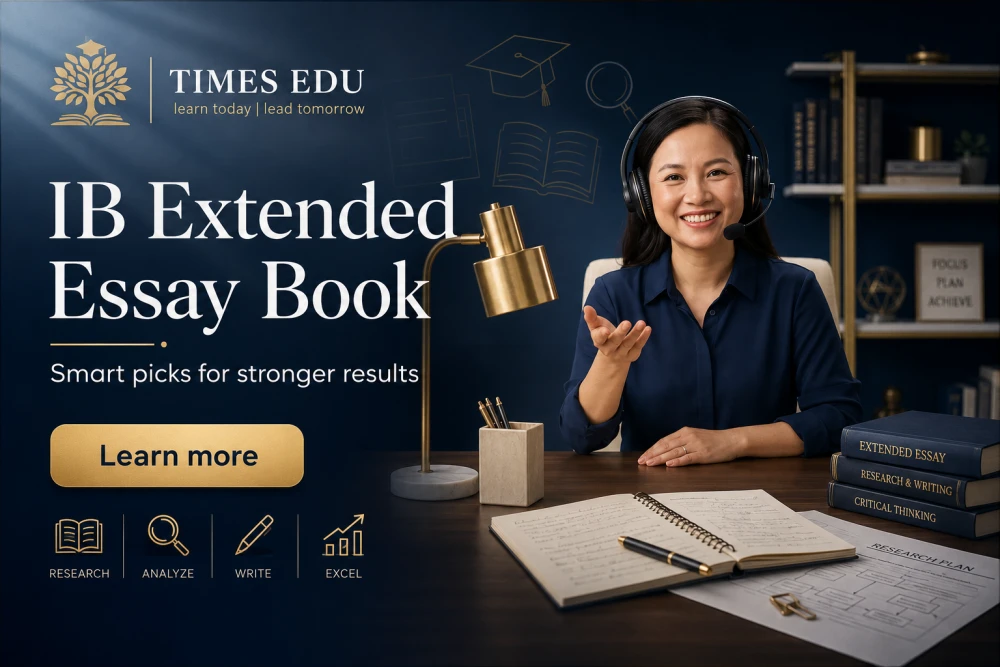
The IB EE [1] is not a coursework assignment with a fixed template. It is a genuine piece of academic research, and the process of planning, drafting, and refining it mirrors what students will face at undergraduate level. That is precisely why a dedicated IB EE guide is so valuable: it provides the scaffolding that no single teacher or supervisor can consistently offer during a busy school year.
There are two publishers whose materials dominate this space: Oxford University Press and Hodder Education. Both produce officially endorsed resources aligned with the IBO assessment criteria, and both are widely used by IB coordinators and students across international schools worldwide. Knowing the difference between them, and knowing when to supplement them with subject-specific tools, is the strategic first step.
A common mistake we see at Times Edu is students approaching the EE purely as a longer version of an internal assessment. It is not. The EE demands a formal methodology, a coherent argument sustained over multiple sections, and a reflective process documented through the Reflections on Planning and Progress (RPPF). A good EE writing process book teaches students to think like a researcher, not just a student completing an assignment.
>>> Read more: IB books 2026: The complete guide to study materials for the IB Diploma
Oxford and Hodder IB Extended Essay guides reviewed and compared
The two flagship publications in this category serve slightly different learning styles. Understanding what each does best allows students and parents to invest in the right resource from the start.
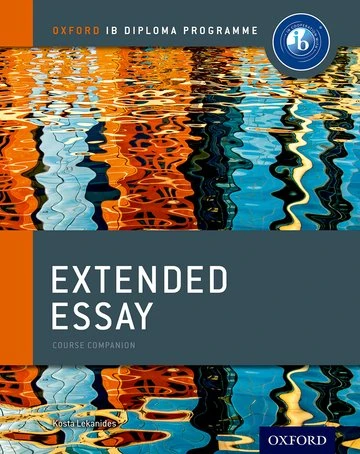
Oxford IB Diploma Programme: Extended Essay Course Companion is written by IB coordinator Kosta Lekanides and is widely regarded as the most comprehensive single resource for the entire EE process. It provides step-by-step guidance from initial topic selection through to the Viva Voce, the mandatory verbal reflection with a supervisor. The 2025 updated edition (First Assessment 2027) is particularly significant because it includes explicit guidance on responsible AI tool usage and academic integrity, two areas where students currently face the greatest risk of inadvertent violations.
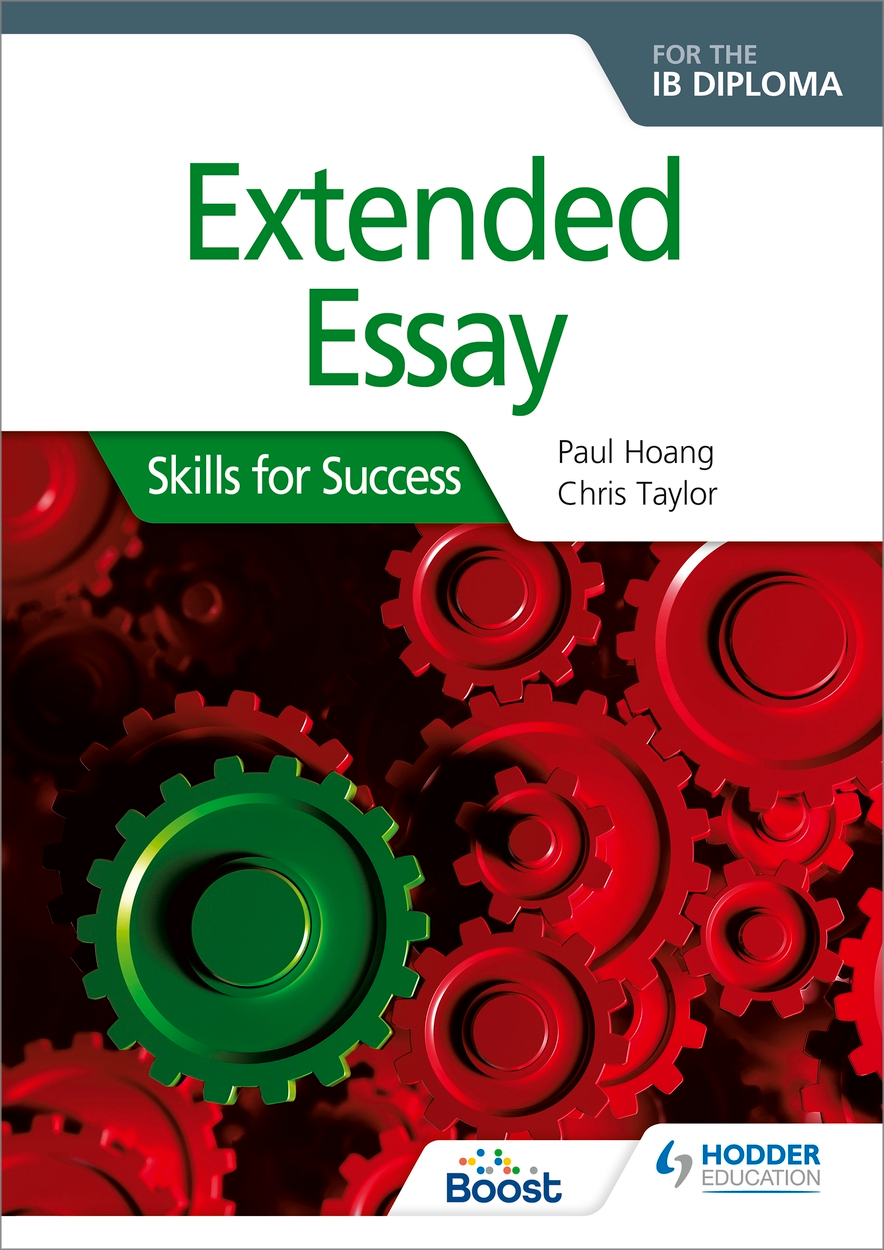
Extended Essay for the IB Diploma: Skills for Success by Paul Hoang and Chris Taylor, published by Hodder Education, takes a more visual and template-driven approach. This book functions as a working toolkit: it includes organisational maps, writing frames, and a library of examiner commentary that identifies the most common structural errors across different subject disciplines. Students who learn best by doing, rather than reading, often find the Hodder format more immediately actionable.
| Feature | Oxford Course Companion | Hodder Skills for Success |
|---|---|---|
| Author(s) | Kosta Lekanides | Paul Hoang and Chris Taylor |
| Publisher | Oxford University Press | Hodder Education |
| Approach | Comprehensive step-by-step narrative | Visual templates and examiner commentary |
| AI and integrity guidance | Yes (2025 edition) | Limited |
| RPPF and Criterion E focus | Strong dedicated checklists | Moderate |
| Best for | Students who want full conceptual grounding | Students who prefer structured, practical tools |
| Subject coverage | Universal across all IB subjects | Universal with discipline-specific pitfalls |
| Recommended level | Self-study and guided use | Guided self-study |
Drawing on years of experience at Times Edu, we recommend that most students own both. The Oxford guide builds the intellectual framework, while the Hodder guide provides the daily working tools. Used together, they cover the full spectrum of what external IB examiners expect.
>>> Read more: IB EE Research Question Too Broad? 5-Step Narrowing Method for A
IB Extended Essay subject-specific guides vs general EE books: what to choose
One critical detail often overlooked is that the way you execute an Extended Essay depends heavily on your chosen subject group. A student writing a Group 3 History EE and a student writing a Group 5 Mathematics EE are essentially doing two different types of research, even though they follow the same core assessment criteria.
General IB EE guides like the Oxford and Hodder publications give you the universal framework: How to structure your argument, how to cite sources, how to write an analytical conclusion. But they cannot give you the discipline-specific knowledge needed to build a credible methodology in, say, experimental chemistry or comparative literature.
Subject-specific guides fill this gap. Some examples worth knowing:
- For Group 5 Mathematics: The Math EE: Earning Full Marks on Your Mathematics Extended Essay by Daniel Slosberg provides detailed blueprints for structuring mathematical proofs and ensuring that the level of mathematical rigor meets examiner expectations.
- For Group 3 Humanities and World Studies: Business Management toolkit workbooks (Hodder) contain sub-chapters on adapting theoretical business models into a valid EE research structure.
- For Group 4 Sciences: Pairing a general EE guide with your subject-specific IB science textbook ensures that your methodology section reflects appropriate experimental design standards.
In our experience working with international students across dozens of IB schools, students who use only a general guide for highly technical subjects tend to underperform on the Criterion B (Knowledge and Understanding) and Criterion C (Critical Thinking) sections. The research question may be well-defined, but the investigative approach lacks the discipline-specific depth that examiners expect.
>>> Read more: IB EE Not Enough Sources 2026: What to Do When Your Research Materials Feel Too Limited
How IB Extended Essay books help with research question and structure
The Extended Essay research question is the foundation of everything. A poorly scoped question leads to an unfocused essay, weak argumentation, and low scores on multiple criteria simultaneously. Yet narrowing a broad area of interest into a precise, arguable, and researchable question is genuinely difficult, especially for 16- and 17-year-old students working largely independently.
This is where a quality IB EE structure guide provides its most practical value. The Hodder publication in particular dedicates significant attention to the process of RQ refinement, offering diagnostic tools that help students identify whether their proposed question is too broad, too descriptive, or insufficiently original. The Oxford guide complements this with a research proposal framework that forces students to map out their methodology before they begin writing.
The core structural components that both books address include:
- The research proposal: Defining a viable question, identifying ethical considerations, and distinguishing between primary and secondary sources.
- The introduction: Contextualising the topic, stating the research question clearly, and signposting the essay’s argumentative direction.
- The body sections: Building an evidence-based argument through logically sequenced sub-sections, each contributing to the central claim.
- The methodology section: Explaining the research approach transparently so that an external reader can evaluate its appropriateness.
- The conclusion: Synthesising findings in direct response to the research question, without introducing new evidence.
- The bibliography and citations: Demonstrating academic honesty through consistent use of APA, MLA, or Chicago formatting.
- The RPPF: Documenting genuine reflection across three formal meetings with the supervisor, which directly affects the Criterion E score.
A common mistake we see is students treating the bibliography as an afterthought. IBO assessment criteria place significant weight on source quality and citation accuracy. An IBO assessment criteria EE rubric will penalise inconsistent or incomplete referencing even when the argument itself is strong.
>>> Read more: IB EE Argument Plan 2026: How to Organize Your Ideas into a Logical and Convincing Essay
Top IB Extended Essay books covering the research and writing process
For students who want a clear ranked list before making a purchasing decision, the following table summarises the leading IB Extended Essay books by use case:
| Book title | Best use case | Subject scope | Price range (approx.) |
|---|---|---|---|
| Oxford IB EE Course Companion (2025 ed.) | Full EE process from start to finish | All subjects | USD 40 to 55 |
| Hodder EE Skills for Success | Practical templates and examiner feedback | All subjects | USD 35 to 50 |
| The Math EE by Daniel Slosberg | Mathematics EE specifically | Group 5 only | USD 20 to 30 |
| Hodder Business Management Toolkit | Humanities and World Studies EE | Group 3 focus | USD 30 to 45 |
One critical detail often overlooked when comparing these resources is the publication date. The IBO updated its EE assessment criteria with First Assessment 2018, and further revisions are in effect for First Assessment 2027. Students sitting exams before 2027 should ensure their guide aligns with the currently active criteria, not an older syllabus version.
The Oxford 2025 edition is the clearest answer to the question of which authorised EE book IB currently reflects the latest assessment standards. The Hodder title has not yet published a fully updated 2025 edition at the time of writing, so students should cross-reference its framework against the official IBO subject guides available on the MyIB portal.
>>> Read more: IB EE Research Question 2026: How to Create a Clear, Focused, and Strong Research Question
Where to buy IB Extended Essay books at the best price online
Students looking to buy IB Extended Essay books have several reliable options. The key is purchasing from authorised retailers to ensure you receive genuine editions that have not been modified or abridged.
Recommended purchasing channels include:
- Oxford University Press Global Store (global.oup.com): Sells the Oxford Course Companion directly, with regional pricing and occasional academic discounts.
- Hodder Education (hoddereducation.com): Direct purchase ensures the latest print run, particularly important for subjects that have recently updated their IB subject guide.
- Amazon (regional stores): Offers competitive pricing, especially when purchasing multiple titles together. Always verify the edition year before completing a purchase.
- Bookshop.org: Useful for students in North America who want to support independent bookshops while accessing IB resources.
- Local IB school bookstores: Many IB World Schools stock Oxford and Hodder titles through their library or learning resource centre, sometimes at subsidised rates for enrolled students.
In our experience working with international students, students in Southeast Asia, the Middle East, and Eastern Europe sometimes face significant shipping delays when ordering physical copies. In those cases, digital eBook editions, available through the Oxford University Press and Hodder platforms, are a practical and equally valid alternative.
>>> Read more: How to Choose IB Subjects for Your Major 2026: A Smart Guide to Picking the Right Combination
Free IB Extended Essay resources vs investing in a dedicated EE guide
The internet offers a large volume of free EE-related content, and it is reasonable to ask whether a dedicated IB EE guide is truly necessary. The honest answer requires distinguishing between types of free content and what they can realistically deliver.
Free resources that are genuinely useful include:
- The official IBO EE guide: Available through MyIB, this document defines the assessment criteria, explains the RPPF, and outlines subject-specific expectations. Every student must read it.
- IBO sample EEs: The IBO publishes annotated sample Extended Essay IB examples for several subjects, with examiner commentary. These are invaluable for calibrating expectations.
- School-provided supervisor meetings: The three mandatory RPPF sessions with a school supervisor are free and structured, provided the student prepares for them properly.
Where free resources fall short is in providing the scaffolded, sequential guidance that a dedicated IB EE step-by-step guide offers. YouTube tutorials and blog posts can explain individual components, but they rarely present a coherent process from RQ development through to Viva Voce preparation. They also cannot replicate the examiner-specific commentary that the Hodder guide provides, or the methodological rigour of the Oxford framework.
Drawing on years of experience at Times Edu, we have observed that students who rely exclusively on free resources tend to produce technically adequate essays that nonetheless score in the C to D range, largely because they lack the structural and argumentative depth that a well-guided process produces. For a component worth up to 3 points toward the IB Diploma bonus threshold, that difference is meaningful.
The recommendation is clear: Use the free IBO resources as your foundational reference, and invest in at least one dedicated IB Diploma core EE guidebook to build the skills and structure that free content cannot systematically provide.
>>> Read more: IB Tutor 2026: How to Choose the Right Tutor for Better Grades and Less Stress
Frequently asked questions
Which IB Extended Essay book is officially authorised by the IBO?
Is there one book that covers the Extended Essay process for all subjects?
What is the best book for choosing an IB Extended Essay research question?
Which IB Extended Essay book provides the best sample essays for reference?
Do I need a subject-specific EE book as well as a general Extended Essay guide?
Are older editions of IB Extended Essay books valid for the current EE criteria?
Which IB Extended Essay book is best for students writing without much supervisor support?