IB Theory of Knowledge (IB TOK) books 2026: Complete guide for IB Diploma students
Theory of Knowledge sits at the very heart of the IB Diploma Programme, yet it remains one of the most misunderstood components for students and parents alike. Unlike subject-specific courses where you master a defined body of content, TOK asks you to question the nature of knowledge itself. Choosing the right IB Theory of Knowledge book is therefore not a minor administrative decision. It is a strategic academic investment that shapes how confidently you engage with Knowledge Questions, construct your TOK essay, and design your TOK exhibition.
- Best IB Theory of Knowledge books
- Oxford and Hodder IB Theory of Knowledge coursebooks reviewed and compared
- IB TOK study guides vs full coursebooks: What do you actually need?
- Top IB Theory of Knowledge books for the TOK essay and TOK exhibition
- How to use an IB TOK book to develop knowledge claims and counterclaims
- Where to buy IB TOK books at the best price online
- Free IB TOK resources vs investing in an authorised study book
- Frequently asked questions
Best IB Theory of Knowledge books
Three publishers dominate the authorised IB Theory of Knowledge textbook [1] market: Oxford University Press, Cambridge University Press, and Hodder Education. Each has produced a dedicated course companion that aligns with the current IB TOK syllabus, which was significantly revised for first assessment in 2022.
Here is a direct comparison of the three leading titles:
| Title | Author(s) | Publisher | Best For |
|---|---|---|---|
| Theory of Knowledge Course Companion | Marija Uzunova Dang, Arvin Uzunov Dang | Oxford University Press | Real-world case studies, integrated DP subject links |
| Theory of Knowledge for the IB Diploma | Richard van de Lagemaat | Cambridge University Press | Deep conceptual clarity, critical thinking development |
| Theory of Knowledge for the IB Diploma | Carolyn P. Henly, John Sprague | Hodder Education | Practical layout, assessment-focused checklists |
All three texts are endorsed resources aligned with IB Diploma core TOK requirements. The question is not which one is “correct” but which one matches your learning style and assessment priorities.
One critical detail often overlooked by students is that the IB does not prescribe a single mandatory textbook for TOK. Your school may use one, none, or a combination. That means self-directed students and home learners carry extra responsibility to select the right resource from the outset.
>>> Read more: IB books 2026: The complete guide to study materials for the IB Diploma
Oxford and Hodder IB Theory of Knowledge coursebooks reviewed and compared
Oxford IB TOK Course Companion
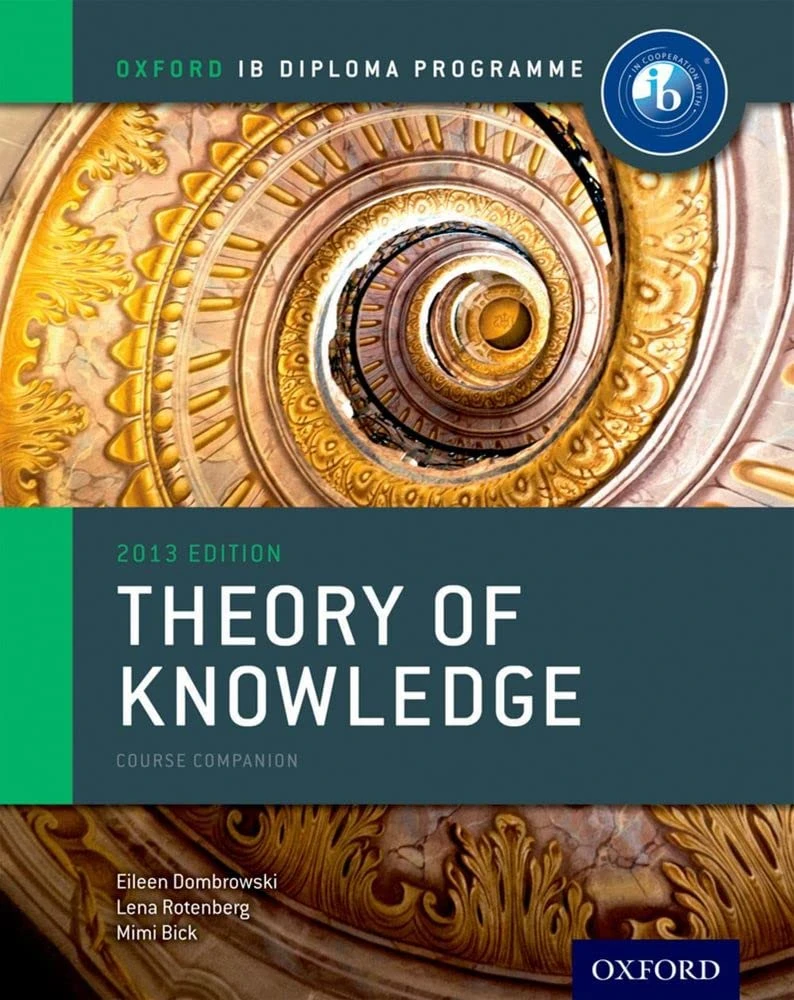
The Oxford IB TOK title, written by Marija Uzunova Dang and Arvin Uzunov Dang, was developed in direct cooperation with the IB organisation. That collaboration matters. The structure, language, and examples inside the book reflect how IB examiners actually think about knowledge, which gives students a measurable advantage in both the TOK essay and the exhibition.
What distinguishes this book is its use of globally relevant case studies tied to real-world issues. These examples are not abstract philosophical thought experiments. They are grounded in contemporary events, scientific discoveries, and cross-cultural debates that a modern 16 to 18-year-old student can immediately connect with.
The Oxford text also includes explicit, step-by-step guidance for planning the TOK Exhibition and drafting the TOK Essay. For students who feel overwhelmed by open-ended assessment tasks, this scaffolding is genuinely valuable.
Hodder IB Theory of Knowledge
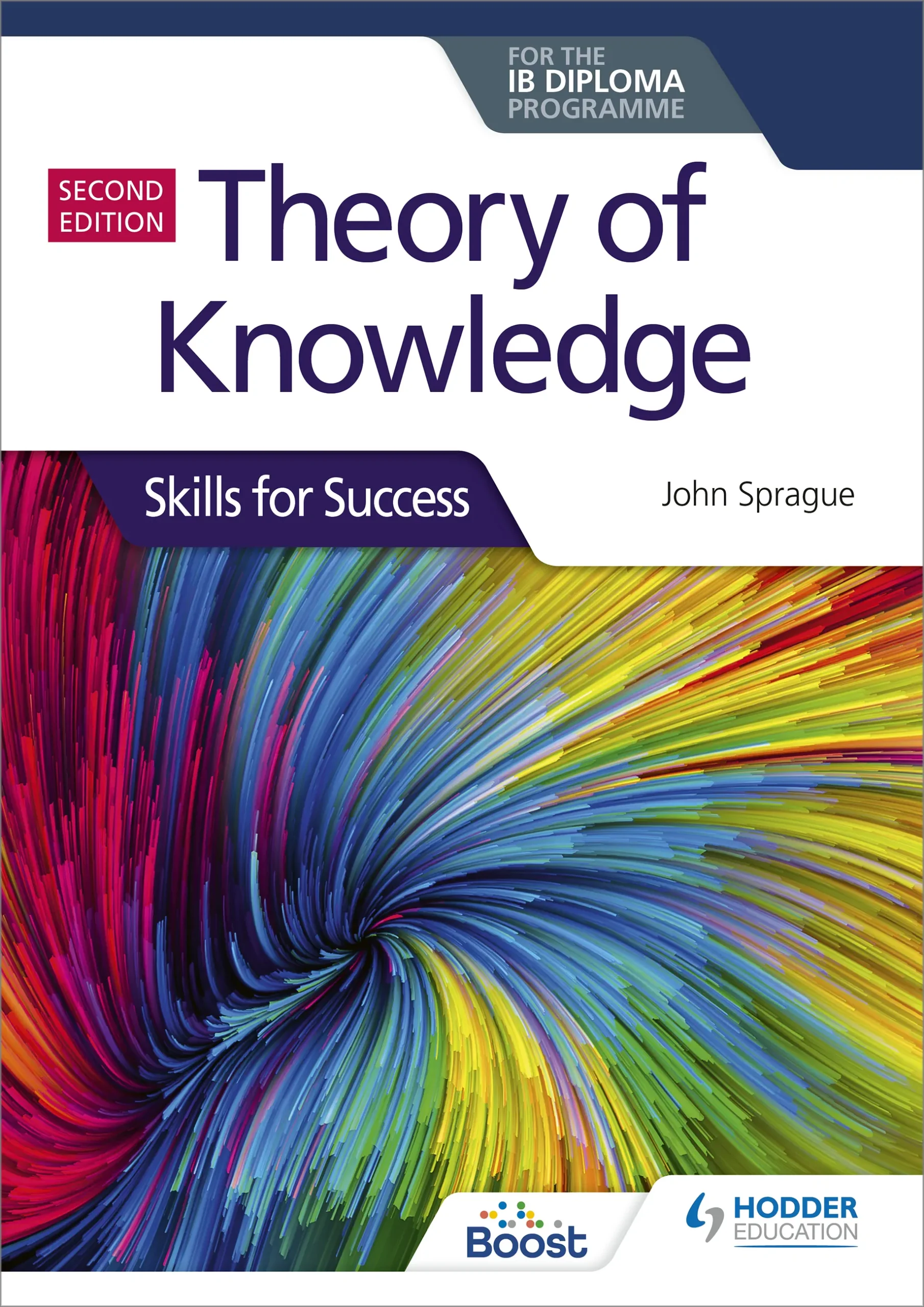
The Hodder IB Theory of Knowledge title, authored by Carolyn P. Henly and John Sprague, takes a different philosophical approach. Rather than leading with case studies, it leads with structure. The modular layout means students can navigate directly to the Optional Theme they are studying without reading the book cover to cover.
In our experience working with international students who struggle with time management, the Hodder book is particularly effective. The dedicated evaluation checklists and sample student outlines reduce the cognitive load of assessments by giving students a concrete template to work from before they develop their own analytical voice.
The Hodder book also excels at teaching knowledge claims and counterclaims, which is the analytical engine of every strong TOK essay. Students who practise the claim-counterclaim-implication structure using Hodder’s worked examples consistently produce more balanced and examiner-ready arguments.
| Feature | Oxford IB TOK | Hodder IB TOK |
|---|---|---|
| IB authorisation | Yes (developed with IBO) | Yes (endorsed) |
| Case study depth | Very high | Moderate |
| Assessment scaffolding | Strong | Very strong |
| Modular navigation | Moderate | Excellent |
| Knowledge claims focus | Good | Excellent |
| Best for self-study | Yes | Yes |
>>> Read more: IB TOK Essay Topic Selection for 2026: How to Choose a Strong and Thoughtful Title Approach
IB TOK study guides vs full coursebooks: What do you actually need?
A common mistake we see at Times Edu is students purchasing a thin IB TOK revision guide and assuming it will carry them through a two-year course. Revision guides are not designed to teach TOK from scratch. They summarise concepts for students who already have a working understanding of the framework.
If you are in Year 1 of the IB Diploma, start with a full coursebook, either the Oxford, Cambridge, or Hodder edition. These give you the conceptual depth you need to engage meaningfully in TOK seminars, develop genuine knowledge claims, and build the analytical habits that examiners reward.
An IB TOK study guide functions differently. It compresses the Areas of Knowledge, Optional Themes, and key philosophical distinctions into a format designed for rapid review. Use it in the final six to eight weeks before your TOK essay submission or exhibition deadline, not as your primary learning resource.
The practical recommendation from Times Edu consultants is this: Own one full coursebook as your primary text, use your school’s materials as supplementary reading, and layer in a revision guide or past essay exemplars in the final preparation phase.
>>> Read more: IB TOK Essay Checklist for 2026: What to Review Before You Submit Your Final Essay
Top IB Theory of Knowledge books for the TOK essay and TOK exhibition
The TOK essay and TOK exhibition are assessed separately and demand different intellectual skills. Your choice of IB Theory of Knowledge book should reflect which task you find more challenging.
For the TOK essay:
The TOK essay requires you to respond to one of six prescribed titles issued by the IB. Success depends on constructing a focused argument using Knowledge Questions, developing genuine knowledge claims and counterclaims, and integrating at least two Areas of Knowledge with real-world examples.
The Cambridge title by Richard van de Lagemaat is exceptional for this. Its treatment of abstract epistemological concepts, covering perception, language, reason, emotion, and intuition as Ways of Knowing, gives students the philosophical vocabulary to write with precision and depth. The hundreds of discussion questions embedded throughout the text train the habit of questioning assumptions, which is exactly what a strong TOK essay structure book should do.
For the TOK exhibition:
The TOK exhibition requires you to select three objects and connect each to a single IA prompt, demonstrating how your chosen objects illustrate a specific knowledge claim in a real-world context.
The Oxford IB TOK Course Companion is the strongest resource here. Its step-by-step exhibition planning framework, combined with its real-world case studies, directly mirrors the kind of contextual thinking the exhibition demands. Students who use this book as their TOK exhibition book reference consistently produce more cohesive object-prompt connections.
For combined essay and exhibition preparation:
| Assessment | Recommended Book | Key Strength |
|---|---|---|
| TOK Essay | Cambridge (van de Lagemaat) | Philosophical depth, Ways of Knowing |
| TOK Exhibition | Oxford (Dang & Dang) | Real-world cases, step-by-step planning |
| Both (single resource) | Hodder (Henly & Sprague) | Structured checklists, balanced coverage |
>>> Read more: IB TOK Essay Timeline 2026: 4-Month Plan from Title to Final Draft
How to use an IB TOK book to develop knowledge claims and counterclaims
Drawing on years of experience at Times Edu, one of the most persistent weaknesses in student TOK essays is the failure to develop genuine counterclaims. Many students acknowledge a counterargument in a single sentence and immediately dismiss it. Examiners are not impressed by this. They want to see you genuinely engage with the tension between competing knowledge claims.
A strong IB TOK book teaches you this skill through repeated practice rather than a single explanation. Here is a practical method for using any of the three major textbooks to build this skill systematically:
Step 1: Read the section relevant to your chosen Areas of Knowledge (History, Natural Sciences, Human Sciences, Mathematics, or The Arts).
Step 2: Identify the central knowledge claim the author presents. Write it in your own words in one sentence.
Step 3: Use the discussion questions at the end of each chapter to locate the strongest objection to that claim.
Step 4: Draft a counterclaim that concedes something meaningful, rather than a superficial objection, and then identify a real-world example that supports it.
Step 5: Ask yourself whether the counterclaim changes or qualifies your original position, or whether it strengthens it when examined carefully. This third step, the implication or qualification, is where high-scoring students separate themselves.
A common mistake we see is students treating counterclaims as obstacles to defeat rather than as tools to refine their thinking. The IB rewards intellectual humility. A student who can say “this evidence challenges my argument, but when examined within a different Area of Knowledge, the original claim holds for the following reason” demonstrates exactly the kind of sophisticated reasoning that earns top marks.
>>> Read more: IB TOK Exhibition Guidance: Complete Step-by-Step Guide for 10/10
Where to buy IB TOK books at the best price online
If you are looking to buy IB TOK books, the most reliable channels are the publisher websites directly, as well as major academic retailers. Below is a practical overview:
| Retailer | Notes |
|---|---|
| Oxford University Press (oup.com) | Official source for Oxford IB TOK, digital and print available |
| Hodder Education (hoddereducation.com) | Official source for Hodder IB TOK, eBook options available |
| Cambridge University Press (cambridge.org) | Official source for van de Lagemaat edition |
| Amazon (international) | Competitive pricing, especially for used or previous editions |
| Book Depository | Free international shipping, good for students outside major markets |
| IB Source (ibsource.com) | Specialist IB retailer, ships globally |
One critical detail often overlooked is the edition year. The IB TOK syllabus was revised substantially in 2022. Older editions of the van de Lagemaat Cambridge text, for example, cover Ways of Knowing as a central organising framework, while the current syllabus has shifted emphasis toward the Core Theme of Knowledge and the Knower and the five Optional Themes. Always verify that the edition you purchase explicitly states alignment with the post-2022 assessment framework.
If budget is a constraint, some school libraries maintain class sets. Ask your TOK teacher before purchasing, since your school may already provide access to a digital licence for one of these titles.
>>> Read more: IB TOK Essay Structure: The Ultimate IB Guide (2026)
Free IB TOK resources vs investing in an authorised study book
The internet offers a large volume of free TOK content: YouTube explainers, Reddit threads, student-uploaded notes, and unofficial revision websites. These resources have genuine value for supplementary learning, but they carry significant risks that are rarely acknowledged.
A common mistake we see among self-study IB Diploma students is over-relying on free online resources that reflect older syllabus structures or the personal interpretation of one student or teacher. The IB TOK assessment criteria are specific and nuanced. A resource that is not aligned with the current official syllabus can actively mislead you about what examiners expect.
What free resources do well:
- Providing quick definitions of Areas of Knowledge and Optional Themes
- Offering example TOK essay introductions for inspiration
- Demonstrating how other students have approached the exhibition IA prompts
What authorised books do that free resources cannot:
- Provide a coherent conceptual framework across the entire course
- Model examiner-level reasoning through worked examples
- Give structured claim-counterclaim practice aligned with current marking rubrics
- Offer legitimate sample student work with examiner commentary
In our experience working with international students who attempt to self-study IB TOK using only free materials, the gap becomes visible in the essay. They understand the vocabulary but cannot apply it to a sustained argument at the required level of depth. Investing in one authorised self-study IB TOK coursebook is the most efficient way to close that gap.
>>> Read more: IB Tutor 2026: How to Choose the Right Tutor for Better Grades and Less Stress
Frequently asked questions
Which IB Theory of Knowledge textbook is officially authorised by the IBO?
Is there a dedicated book for the TOK essay and TOK exhibition separately?
What is the best IB TOK revision guide for last-minute exam preparation?
Which IB Theory of Knowledge book covers the Areas of Knowledge most clearly?
Do I need a TOK book if my school already provides TOK materials?
Are older editions of IB Theory of Knowledge books valid for the new TOK syllabus?
Which IB Theory of Knowledge book is best suited for self-study IB Diploma students?
Conclusion
At Times Edu, we work with IB Diploma students individually to identify exactly which resources, study methods, and strategic approaches match their academic profile, learning style, and university ambitions. If you are an IB student or a parent supporting one, and you want a personalised academic roadmap that integrates TOK preparation into your broader Diploma strategy, our consultants are ready to help you build that plan from day one.