IB English A: Literature: Syllabus, Exam Structure & Roadmap to an 7 2026
IB English A: Literature is one of the most intellectually demanding courses in the IB Diploma Programme, and it is also one of the most misunderstood. Students often arrive in Year 1 of the diploma expecting a course that resembles high school English class. What they encounter instead is a rigorous, university-style discipline that demands close reading, analytical precision, and the ability to construct compelling arguments about complex texts from multiple cultures and time periods.
This guide breaks down everything you need to know about IB English Language A Literature, from curriculum structure and assessment components to preparation strategies and common mistakes. Whether you are a student mapping out your IB subject choices or a parent trying to understand what your child will face over the next two years, this is the most complete resource you will find.
- IB English A Literature: What it covers and what students can expect
- The difference between IB English A Literature SL and HL
- Core literary works and set texts in IB English A Literature
- How IB English A Literature is assessed across all components
- Paper 1 literary analysis in IB English A Literature explained
- Paper 2 comparative essay in IB English A Literature: Structure and strategy
- The Individual Oral in IB English A Literature: Preparation and structure
- The Higher Level Essay in IB English A Literature
- Best resources and study strategies for IB English A Literature students
- Frequently asked questions
IB English A Literature: What it covers and what students can expect
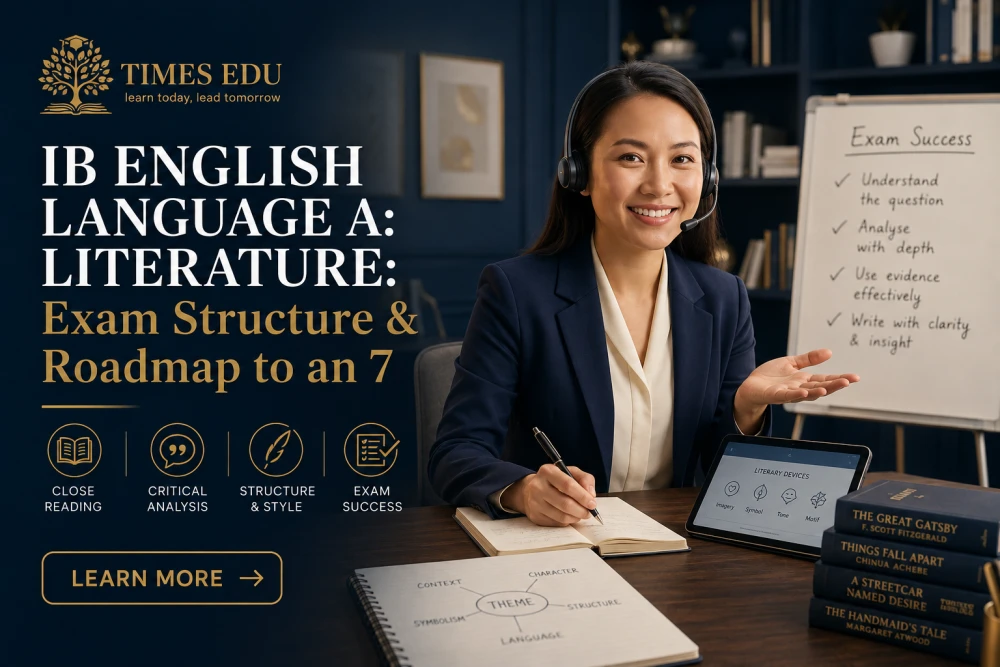
IB English A: Literature [1] sits within Group 1 of the IB Diploma [2], which covers Studies in Language and Literature. This particular course is designed exclusively for students who already possess native or near-native fluency in English. It is not a language acquisition course. Every hour of instruction is devoted to literary study: The analysis of novels, poetry, drama, and non-fiction prose drawn from a wide range of cultures, historical periods, and perspectives.
The IB organizes its literary curriculum around three interconnected areas of exploration. These are: Readers, writers, and texts; time and space; and intertextuality: Connecting texts. Rather than treating literature as a collection of isolated books, the IBO Language A Literature framework asks students to see each work in relation to its context, its author’s intentions, and other texts studied alongside it.
One critical detail often overlooked by new students is the emphasis on translated literature. The IB curriculum actively requires schools to include works originally written in other languages, such as novels by Haruki Murakami or Gabriel García Márquez in English translation. This is not accidental. The IB wants students to engage with global literary traditions, not just the Anglo-American canon.
>>> Read more: IB English A Language & Literature books 2026: Complete guide for students and teachers
The difference between IB English A Literature SL and HL
The decision between Standard Level (SL) and Higher Level (HL) in IB English A: Literature is one that has real consequences, both for workload and for university positioning. Students and parents need to understand this distinction clearly before subject selection.
| Feature | Standard Level (SL) | Higher Level (HL) |
|---|---|---|
| Number of set works studied | 9 works | 13 works |
| Paper 1 weighting | 35% | 35% |
| Paper 2 weighting | 35% | 25% |
| HL Essay | Not required | 20% of final grade |
| Individual Oral weighting | 30% | 20% |
| Depth of analysis expected | Strong analytical writing | University-level critical thinking |
The most significant difference between SL and HL is the addition of the Higher Level Essay at HL. This is a formal, independently researched piece of writing between 1,200 and 1,500 words, and it requires students to develop an original argument about one of their set works without constant teacher guidance.
In our experience working with international students at Times Edu, many high-achieving students underestimate the HL workload in the first semester. Reading 13 substantial literary works while simultaneously preparing for five other IB subjects requires disciplined time management from Day 1. Students considering literature or humanities at university should take HL. Students who enjoy literature but are primarily STEM-focused may find SL a more sustainable choice.
>>> Read more: IB books 2026: The complete guide to study materials for the IB Diploma
Core literary works and set texts in IB English A Literature
Each IB school selects its own set works from the IB’s prescribed reading list, which means there is no single universal booklist across all schools worldwide. However, there are structural requirements the school must follow.
The texts must span:
- Prose fiction (novels and short stories)
- Poetry (individual collections or selected poems by one or more poets)
- Drama (stage plays from different periods and cultures)
- Non-fiction prose (essays, memoirs, speeches)
Schools must also ensure that texts come from different regions and that some works were originally written in a language other than the language of study. This cross-cultural requirement is at the heart of what distinguishes IB Diploma English Literature from national curriculum equivalents like A Level English Literature.
A common mistake we see among students is treating all set works equally in terms of study depth. In practice, some texts will appear in Paper 2 and require deep comparative knowledge, while others may be better suited to the Individual Oral. Students should work with their teachers early to understand which works will serve which assessments best.
>>> Read more: IB English Paper 1 Evidence Selection 2026: How to Pick Quotes That Prove Your Argument
How IB English A Literature is assessed across all components
IB English A: Literature uses a mixed assessment model that combines timed external exams with school-based internal assessments. There are no multiple-choice questions in this course. Every mark is earned through analytical writing or structured spoken assessment.
| Component | Assessment type | SL weighting | HL weighting |
|---|---|---|---|
| Paper 1 | External written exam (unseen text analysis) | 35% | 35% |
| Paper 2 | External written exam (comparative essay) | 35% | 25% |
| HL Essay | Externally assessed written assignment | Not applicable | 20% |
| Individual Oral | Internally assessed, externally moderated | 30% | 20% |
Drawing on years of experience at Times Edu supporting IB students across multiple cohorts, one pattern stands out clearly: Students who do well in IB Literature are not necessarily the best readers. They are the students who understand what each assessment component is actually testing, and who practice the specific skills required for each one separately.
>>> Read more: IB English Paper 2 Essay Structure 2026: How to Build a Clear and Comparative Essay
Paper 1 literary analysis in IB English A Literature explained
Paper 1 is the component that causes the most anxiety among students, and for understandable reasons. Students are presented with one or two completely unseen literary passages under timed exam conditions. They have not seen these texts before. There is no prior preparation for the specific content. The exam tests pure analytical skill.
At Standard Level, students analyze one unseen text and are given a guiding question to direct their response. At Higher Level, students receive two unseen texts with no guiding question, and they must analyze both passages, producing a structured literary analysis for each.
The unseen text could be:
- A poem by a contemporary or classical writer
- An extract from a novel or short story
- A passage from a memoir, essay, or non-fiction work
- A dramatic monologue or script excerpt
A common mistake we see in Paper 1 responses is descriptive writing masquerading as analysis. Students describe what happens in the text rather than explaining how specific literary devices create meaning or effect. The examiner is not asking what the text is about. They are asking how language, structure, imagery, tone, diction, and form work together to produce a specific impact on the reader.
Step-by-step approach for Paper 1:
- Read the passage twice before writing anything.
- Annotate for literary devices, tone shifts, structural choices, and patterns.
- Identify one overarching interpretive argument about the text’s effect or meaning.
- Structure your response with a clear introduction, developed analytical paragraphs, and a brief conclusion.
- Use embedded quotations and link every device back to its effect.
Consistent practice with IB Literature past papers is the single most effective preparation strategy for Paper 1. Students should aim to complete at least one timed Paper 1 practice per month from the start of Year 1.
>>> Read more: IB English Paper 1 Planning: 4-Step Pre-Write Method for Score 7
Paper 2 comparative essay in IB English A Literature: Structure and strategy
Paper 2 is a closed-book timed essay in which students compare two literary works they have studied in class. The exam presents a choice of questions, each built around a broad literary or thematic concept. Students select one question and write a comparative essay using two of their studied texts.
The key word in Paper 2 is comparative. A strong response does not simply discuss Text A and then discuss Text B in two separate halves. It weaves the two texts together, moving between them to construct a unified analytical argument about how both authors approach the same theme, technique, or concept.
One critical detail often overlooked by even strong students is the role of authorial choice. The Paper 2 essay should not just identify similarities and differences between two books. It should explain why each author made the choices they made, what the effect of those choices is, and what insight the comparison reveals about literature, human experience, or society.
Common mistakes in Paper 2:
- Choosing two texts that are too similar, making genuine comparison difficult
- Treating the essay as a retelling of plot
- Spending too much time on one text and neglecting the other
- Writing a strong first half and running out of time for a proper conclusion
Students should have at least three pairs of texts ready before the exam, so they can select the best pairing for whichever question appears.
>>> Read more: IB English Essay Structure 2026: A Clear Framework for Strong Thesis, Analysis, and Conclusion
The Individual Oral in IB English A Literature: Preparation and structure
The Individual Oral (IO) is a 15-minute recorded spoken assessment. Students deliver a structured analysis of how a global issue is explored through one extract from each of two studied literary works, one of which must be a work in translation.
The global issue is not a vague theme. It must be specific, clearly connected to the world beyond the texts, and genuinely significant. Examples of strong global issues include systemic racism in colonial and post-colonial societies, the psychological consequences of political oppression, gender inequality and social expectation across cultures, or the ethics of memory and historical narrative.
The IO follows this structure:
- 10 Minutes of student-led presentation (approximately 5 minutes per text)
- 5 Minutes of follow-up questions from the teacher/examiner
Drawing on years of experience at Times Edu, the most common weakness we observe in Individual Oral preparation is a student selecting a global issue that is too broad. Saying your global issue is “power” or “identity” is not sufficient. The issue must be specific enough to anchor a focused, detailed analysis across two texts.
Preparation checklist for the Individual Oral:
- Select a global issue that is genuinely visible in both chosen texts
- Choose extracts carefully: They should be rich in literary devices and offer multiple points of discussion
- Write a structured speech script and rehearse it until delivery is fluent
- Prepare 3 to 4 likely follow-up questions and practice answering them clearly
- Record yourself and review the recording for pace, clarity, and analytical depth
>>> Read more: IB Tutor 2026: How to Choose the Right Tutor for Better Grades and Less Stress
The Higher Level Essay in IB English A Literature
The HL Essay is a formal piece of written research completed by HL students only. It is 1,200 to 1,500 words long, externally assessed by the IB, and must focus on one of the literary works studied in class. Students develop their own research question and build an independent, evidence-based argument.
This is the component that most closely resembles university-level academic writing. The HL Essay rewards original thinking, precise use of evidence, and the ability to sustain a focused argument over several paragraphs without losing coherence.
A well-constructed HL Essay focuses on something genuinely specific: Not “how is conflict shown in this novel” but rather something like “how does the author use narrative fragmentation in chapters 4 through 9 to reflect the protagonist’s fractured psychological state.”
The HL Essay also gives students an opportunity to explore aspects of a text that may not come up in Paper 2 or the Individual Oral. Used strategically, it can deepen a student’s command of one text significantly, which then benefits their overall performance across assessments.
Best resources and study strategies for IB English A Literature students
Effective IB Literature revision is not about reading summaries or memorizing quotes. It is about developing and refining a set of analytical skills that can be applied flexibly across any text, seen or unseen.
Recommended study strategies:
- Complete regular timed writing practice for both Paper 1 and Paper 2 from Year 1
- Build a personal literary device glossary with examples from your set works
- Keep a reading journal for each text noting themes, structural choices, and significant passages
- Discuss texts with peers and articulate your interpretations out loud, not just in writing
- Work through IB Literature past papers under exam conditions and review them critically
Recommended resources:
| Resource type | Examples |
|---|---|
| Past paper practice | IB past papers via Follet IB Store or your school’s access |
| Secondary criticism | Sparknotes (for basic orientation), JSTOR articles, and literary criticism anthologies |
| Vocabulary building | Academic word lists for literary analysis, examiner reports |
| Individual Oral practice | Recorded mock orals with teacher feedback |
| HL Essay support | Draft review sessions with a subject specialist tutor |
In our experience working with international students across multiple IB schools and cohorts, students who work with a dedicated subject tutor for IB Literature see measurable improvement in their written analytical precision within six to eight weeks of consistent practice. The difference is not exposure to more content. It is targeted feedback on their specific writing weaknesses.
Frequently asked questions
What is the difference between IB English A Literature and IB English Language and Literature?
How many literary works do you study in IB English A Literature?
What is the Higher Level Essay in IB English A Literature?
How is Paper 2 assessed in IB English A Literature?
What global issue should I choose for the IB English A Literature Individual Oral?
How do you score a 7 in IB English A Literature?
Which IB English A option is better for students aiming to study literature at university?
Conclusion
At Times Edu, our team of specialist IB Literature tutors works with students one-on-one to identify their specific weaknesses across each assessment component and build a structured preparation plan tailored to their school’s set works and timeline. Whether your child is just beginning the IB Diploma or approaching the final exam session, a personalized academic roadmap consultation is the most efficient first step toward achieving the grade their potential deserves.
Resources: