IGCSE books 2026: The complete guide to choosing the right study materials
Choosing the right IGCSE books is one of the most consequential decisions a student makes before exam season begins. The wrong textbook wastes months of study time. The right one, matched to the correct syllabus code and assessment objectives, can be the difference between a Grade 5 and a Grade 9.
Drawing on years of experience at Times Edu working with IGCSE students across Vietnam, Singapore, the UAE, and beyond, this guide cuts through the noise. It tells you exactly which books to buy, which publishers to trust, how to use them strategically alongside past papers, and where to find them at a fair price.
- IGCSE books: The complete guide to choosing the right study materials
- Best IGCSE textbooks by subject: The definitive list
- IGCSE revision guides vs textbooks: which do you actually need?
- Cambridge University Press IGCSE books: what is available by subject
- Where to buy IGCSE books online at the best price
- How to use IGCSE books alongside past papers for maximum results
- Free IGCSE resources vs investing in quality study books
- Frequently asked questions
IGCSE books: The complete guide to choosing the right study materials
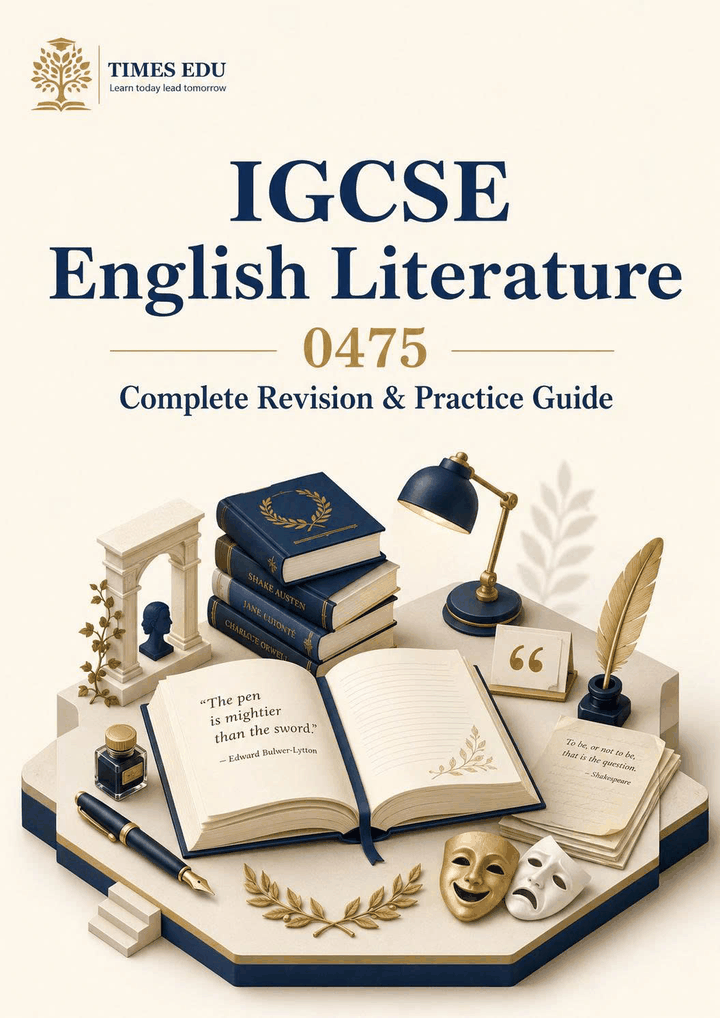
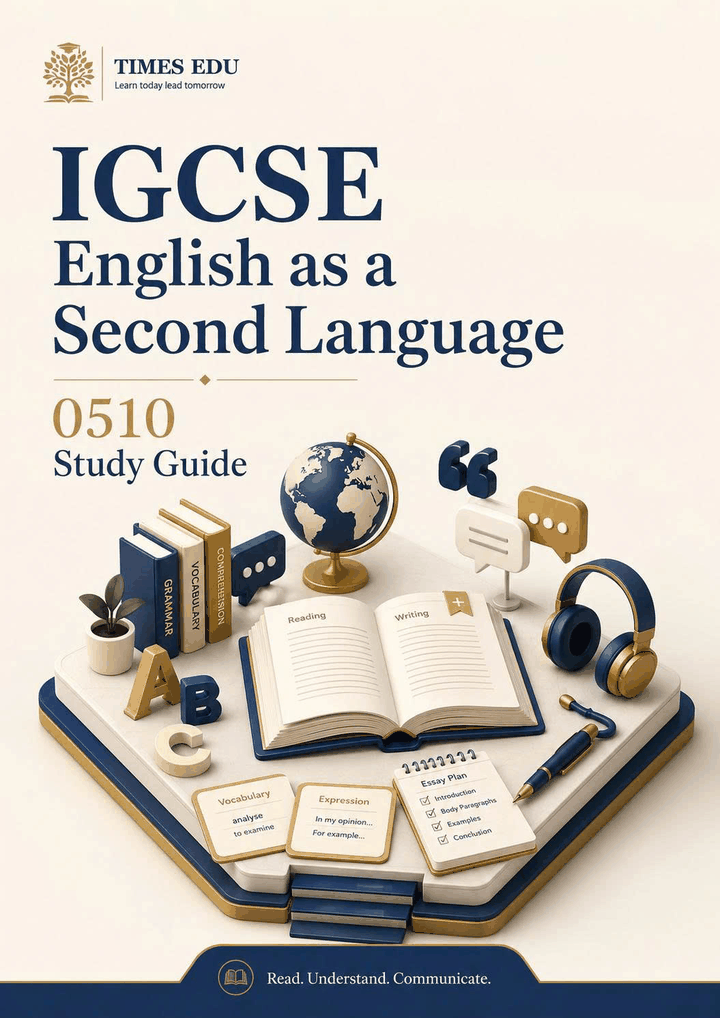
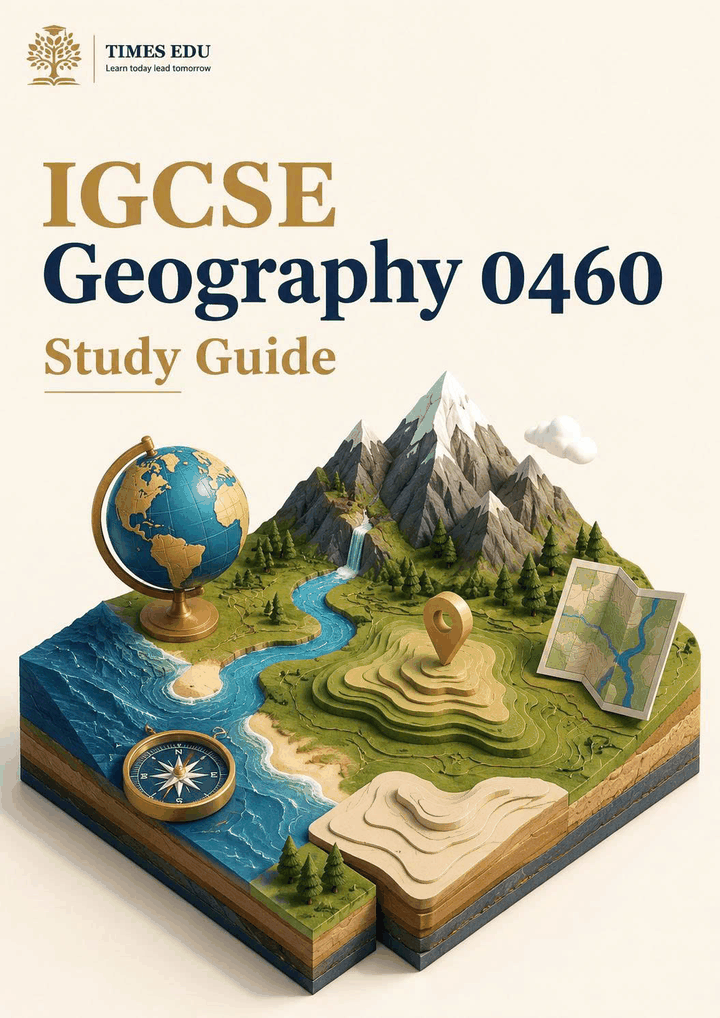
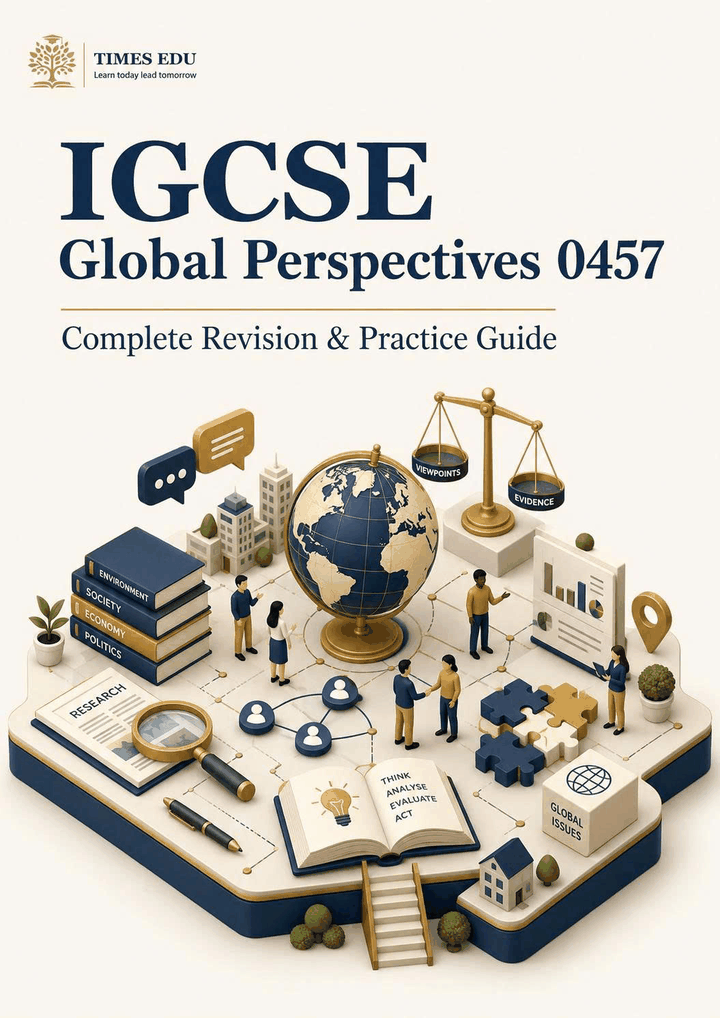
The IGCSE is offered by two main awarding bodies: Cambridge Assessment International Education (CAIE) and Pearson Edexcel. The books you choose must align with the correct board and the correct syllabus code, because assessment structures, command words, and mark scheme logic differ between the two.
A common mistake we see is students purchasing a well-reviewed IGCSE textbook, only to discover halfway through the year that it covers a syllabus that was updated two years ago. Cambridge regularly revises its syllabuses, so always cross-check the edition year of any book against the current syllabus on the Cambridge website before purchasing.
There are three categories of IGCSE books you need to understand before spending a single dollar:
- Textbooks: Comprehensive coverage of the full syllabus, written for classroom use or structured self-study.
- Revision guides: Condensed summaries designed for exam preparation in the final weeks before sitting papers.
- Workbooks: Practice-focused resources with structured exercises that reinforce understanding topic by topic.
Each type serves a different purpose at a different stage of the academic year. Buying all three for every subject is rarely necessary. Buying the right one at the right time, however, is essential.
>>> Read more: Choosing IGCSE Subjects for Top Universities: 2026 Strategic Guide
Best IGCSE textbooks by subject: The definitive list
The publisher landscape for IGCSE study materials is dominated by four major names: Cambridge University Press, Hodder Education, Oxford University Press, and Collins. Each has genuine strengths depending on the subject.
Below is a subject-by-subject breakdown of the most reliable IGCSE books currently available:
| Subject | Recommended Textbook | Publisher | Notes |
|---|---|---|---|
| Mathematics (0580) | Cambridge IGCSE Mathematics Core and Extended | Cambridge University Press | Fully Cambridge endorsed, covers both tiers |
| Physics (0625) | Cambridge IGCSE Physics | Hodder Education | Clear diagrams, strong exam-style questions |
| Chemistry (0620) | Cambridge IGCSE Chemistry | Cambridge University Press | Endorsed, updated for latest syllabus |
| Biology (0610) | Cambridge IGCSE Biology | Hodder Education IGCSE | Strong case studies and command word practice |
| English Language (0500) | Cambridge IGCSE English as a First Language | Cambridge University Press | Endorsed, includes writing and reading tasks |
| Economics (0455) | Cambridge IGCSE Economics | Hodder Education | Excellent real-world examples |
| History (0470) | Cambridge IGCSE and O Level History | Hodder Education | Covers both source and essay questions well |
| Computer Science (0478) | Cambridge IGCSE Computer Science | Cambridge University Press | Endorsed, includes pseudocode practice |
| Geography (0460) | Cambridge IGCSE Geography | Collins IGCSE | Strong for fieldwork and case study elements |
| Business Studies (0450) | Cambridge IGCSE Business Studies | Oxford IGCSE books | Good for applied business scenarios |
One critical detail often overlooked is that “Cambridge endorsed” does not automatically mean “best for your specific learning style.” Endorsed status simply confirms the book accurately reflects the syllabus. A student who struggles with dense academic prose may find a Collins IGCSE guide far more accessible than the official Cambridge University Press IGCSE edition, even if the latter carries the endorsement badge.
>>> Read more: Ace IGCSE Biology 0610 | A* Revision Strategy 2026
IGCSE revision guides vs textbooks: which do you actually need?
This is one of the most debated questions among IGCSE students and their parents. The short answer: you almost certainly need both, but not in the same way and not at the same time.
A full IGCSE textbook is designed to build understanding from scratch. It walks through concepts in logical order, with explanations, worked examples, and practice questions embedded throughout. It is the primary tool for the first nine to ten months of the course.
An IGCSE revision guide is something entirely different. It assumes you already understand the content and is structured to help you recall, consolidate, and apply knowledge under exam conditions. Revision guides work best in the final six to eight weeks before exams.
In our experience working with international students who arrive at Times Edu mid-year, a common and costly mistake is relying solely on the IGCSE study guide without ever building deep conceptual understanding from a proper textbook. These students can recall definitions but collapse when faced with unfamiliar application questions.
The most effective combination by stage of study:
- Months 1 to 8: Use the full textbook as your primary resource. Do not skip sections because they seem easy.
- Months 9 to 10: Introduce the IGCSE workbook for structured practice across all topics.
- Final 6 to 8 weeks: Switch to the IGCSE revision guide for quick-fire recall and past paper integration.
>>> Read more: IGCSE Global Perspectives 0457: Exam Structure & Roadmap to an A* in 2026
Cambridge University Press IGCSE books: what is available by subject
Cambridge University Press (CUP) is the publishing arm of the University of Cambridge and produces the most comprehensively aligned IGCSE books on the market. Their materials are developed in close consultation with CAIE, which means syllabus coverage is exceptionally tight.
The CUP catalogue covers the following formats across most core subjects:
- Student’s Book: The main textbook, covering the full syllabus with explanations and exercises.
- Workbook: Additional practice questions, ideal for reinforcing weak areas.
- Teacher’s Resource: Not essential for students, but some parents find these useful for home-education contexts.
- Digital editions: Available through the Cambridge GO platform, with some interactive features built in.
One area where Cambridge University Press IGCSE books genuinely excel is in their use of official command words throughout exercises. Terms like “analyse,” “evaluate,” “describe,” and “explain” appear consistently and are used with precision, which trains students to respond correctly to exam questions from the very beginning of their studies.
A note of caution: CUP books are priced at a premium. For families managing costs across multiple IGCSE subjects, it is worth knowing that Hodder Education IGCSE and Oxford IGCSE books often offer equivalent quality at a slightly lower price point, particularly for sciences and humanities.
>>> Read more: IGCSE Business 0450 Answer Structure: How to Write High-Scoring Responses
Where to buy IGCSE books online at the best price
The global market for IGCSE books online has expanded significantly, giving students outside the UK access to materials that were once difficult to source. Here are the most reliable channels ranked by convenience and price:
Primary online retailers:
- Amazon: The widest selection of new IGCSE books by far, with fast international shipping to most countries. Prices are usually competitive for Cambridge University Press and Hodder Education titles.
- Book Depository (now integrated into Amazon): Previously a go-to for free international shipping, now redirect to Amazon in most regions.
- Cambridge University Press website: Allows direct purchase of CUP titles, sometimes with bundle discounts.
- Fishpond, Wordery, and TheNile: Alternatives worth checking for region-specific pricing.
Second hand IGCSE books:
Buying second hand IGCSE books is a legitimate and cost-effective strategy, particularly for subjects where the syllabus has not changed recently. Platforms like AbeBooks, ThriftBooks, eBay, and local Facebook groups for international school parents are all worth exploring.
The key risk with second hand IGCSE books is edition mismatch. Always verify the syllabus year the book was written for before purchasing. A 2016 edition of an IGCSE Chemistry textbook may not reflect the updated 2023 syllabus content.
Regional options:
- In Vietnam, Times Edu students often source books through Fahasa, Lazada, or direct import orders that the school facilitates.
- In Singapore and Malaysia, Popular Bookstore and MPH carry most major IGCSE titles.
- In the UAE, Kinokuniya and Magrudy’s stock a broad range of Cambridge endorsed materials.
>>> Read more: IGCSE Economics 0455: Exam Structure & Roadmap to an A* in 2026
How to use IGCSE books alongside past papers for maximum results
A textbook without past papers is like training in a gym but never competing. And past papers without textbook grounding produce students who memorise answers without understanding the underlying logic. The two must work together.
The most effective study method, refined through years of working with high-achieving IGCSE students at Times Edu, follows this sequence:
- Study a topic using the IGCSE textbook, reading the explanation and completing in-text exercises.
- Complete the corresponding workbook section to reinforce the topic with varied practice questions.
- Pull two or three past paper questions on that same topic from the Cambridge past papers portal (freely available at pastpapers.co or directly from the CAIE website).
- Mark your answers against the official mark scheme, paying close attention to what examiners specifically credit.
- Return to the textbook if the mark scheme reveals a conceptual gap.
- Use the IGCSE revision guide in the final weeks to review topics rapidly before timed full-paper practice.
One critical detail often overlooked is the examiner’s report. Cambridge publishes examiner reports after each examination series, detailing the most common errors students make. These documents are free, rarely read by students, and arguably more valuable than any commercial IGCSE study guide on the market.
>>> Read more: IGCSE Combined Science 0653: Exam Structure & Roadmap to an A* in 2026
Free IGCSE resources vs investing in quality study books
The internet contains an enormous volume of free IGCSE subject resources. YouTube channels like Cognito, Science and Maths by Primrose Kitten, and Exam Solutions cover significant ground. Revision platforms like Revision Village (for Maths), Save My Exams, and Physics and Maths Tutor provide structured notes and topic questions at no cost.
These free resources are genuinely useful, particularly for students with limited budgets. However, they carry limitations that become significant at higher grade targets.
Free resources are rarely comprehensive. They tend to cover common topics well and neglect niche syllabus areas. A student aiming for the top grades needs full, verified syllabus coverage, and that is where quality IGCSE books remain indispensable.
The most intelligent approach combines both:
| Resource Type | Best Use Case | Cost |
|---|---|---|
| Full IGCSE textbook | Building foundational understanding | Paid (USD 30-60) |
| IGCSE workbook | Topic-by-topic practice | Paid (USD 15-30) |
| IGCSE revision guide | Pre-exam consolidation | Paid (USD 12-20) |
| Free YouTube channels | Supplementary explanation of difficult concepts | Free |
| Past papers and mark schemes | Exam technique and pattern recognition | Free (CAIE website) |
| Examiner reports | Understanding marking priorities | Free (CAIE website) |
| Save My Exams / Revision Village | Quick topic quizzes and revision notes | Free or low-cost subscription |
In our experience working with international students, those who invest in two or three well-chosen IGCSE books per subject and supplement with free resources consistently outperform those who rely on free materials alone, especially in Sciences and Mathematics where worked examples and progressive difficulty exercises matter enormously.
>>> Read more: IGCSE Maths 0580 A* Strategy 2026: 8 Tips From Top Tutors
Frequently asked questions
Which IGCSE books are officially endorsed by Cambridge?
Do I need to buy an IGCSE textbook or is the free syllabus enough?
What is the best IGCSE revision guide for last-minute exam prep?
Are Cambridge University Press IGCSE books worth the price?
Where can I download IGCSE books as PDFs legally and for free?
How do IGCSE books differ from standard GCSE books?
Which IGCSE books are best suited for self-study students?