IGCSE Chemistry show your working 2026: The complete guide to calculation marks
In IGCSE Chemistry, showing your working means making every calculation step visible so the examiner can see how you reached your answer.…

Read more →Showing 28 - 36 of 288 results
In IGCSE Chemistry, showing your working means making every calculation step visible so the examiner can see how you reached your answer.…
Read more →
IGCSE Chemistry calculation mistakes often come from using the wrong formula, missing unit conversions, applying incorrect mole ratios, or rounding values too…
Read more →
Cambridge IGCSE Chemistry does not provide a dedicated formula sheet, so students are expected to memorise the key equations needed for calculations.…
Read more →
IGCSE Chemistry graph drawing rules require students to choose the correct axes, label quantities and units clearly, use an appropriate linear scale,…
Read more →
IGCSE Chemistry experimental errors are factors that cause measured results to differ from the true value because of limitations in equipment, methods,…
Read more →
IGCSE Chemistry experiment planning requires students to design a clear, measurable, and repeatable investigation that meets Cambridge AO3 assessment criteria. A strong…
Read more →
IGCSE Chemistry Alternative to Practical, also known as Paper 6, is a written exam that assesses practical and experimental skills without requiring…
Read more →
Improving accuracy in IGCSE Chemistry means reducing avoidable mistakes in how you read, calculate, and write your answers. Students need to identify…
Read more →
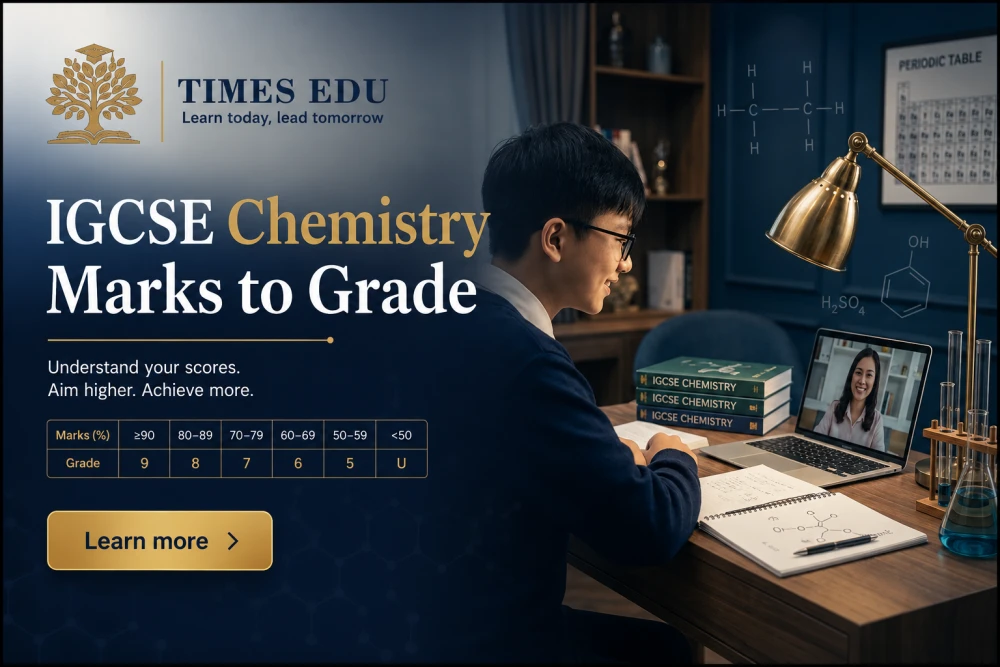
IGCSE Chemistry marks are converted into grades using a weighted system rather than a simple percentage. Raw marks from each paper are…
Read more →