IGCSE Global Perspectives 0457 books 2026: Complete guide for students and teachers
Choosing the right IGCSE Global Perspectives book can make a significant difference in how effectively students develop the research, analysis, evaluation, and communication skills required for Cambridge 0457.
This guide compares the two official Cambridge-endorsed coursebooks from Cambridge University Press and Oxford University Press, explains their strengths for classroom learning and independent study, and shows how they should be combined with the syllabus, past papers, and examiner reports for complete exam preparation.
- Official Cambridge-endorsed IGCSE Global Perspectives coursebooks reviewed
- IGCSE Global Perspectives study guides vs full coursebooks: what to choose
- How IGCSE Global Perspectives books develop critical thinking and research skills
- Top books and resources for the IGCSE Global Perspectives team project
- Where to buy IGCSE Global Perspectives books at the best price
- Free IGCSE Global Perspectives resources vs investing in a dedicated study book
- Frequently asked questions
Official Cambridge-endorsed IGCSE Global Perspectives coursebooks reviewed
When parents and students search for a Cambridge 0457 [1] book, two publishers stand above all others: Cambridge University Press (CUP) and Oxford University Press (OUP). Both carry official Cambridge endorsement, meaning their content directly mirrors the current syllabus framework and assessment objectives.
Cambridge IGCSE and O Level Global Perspectives Coursebook (Cambridge University Press)
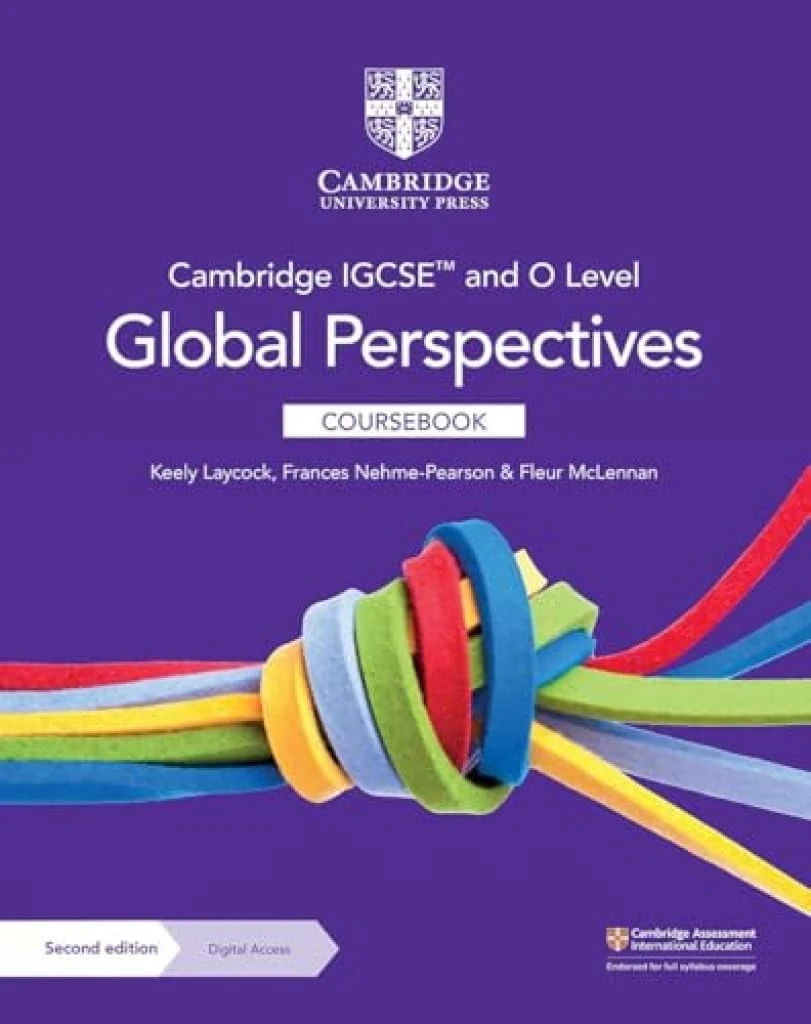
This is the flagship Cambridge IGCSE Global Perspectives coursebook, authored by Keely Laycock, Frances Nehme-Pearson, and Fleur McLennan. The Second Edition is fully updated for the current examination cycle and represents the closest alignment possible to the official Cambridge 0457 specification.
The book is structured around active, enquiry-led tasks rather than passive reading. Each chapter builds skills across real global themes such as climate change, public health, cultural identity, and sustainability, giving students authentic contexts within which to practice argument construction and source evaluation.
A notable feature is the inclusion of language tooltips and keyword definitions embedded throughout each unit, which makes the Cambridge IGCSE Global Perspectives coursebook particularly useful for students who are working in English as a second or third language. The purchase option for this title typically bundles a physical copy with two years of digital access through the Cambridge GO platform, giving students flexibility to annotate digitally or work offline.
Cambridge IGCSE and O Level Complete Global Perspectives Student Book (Oxford University Press)
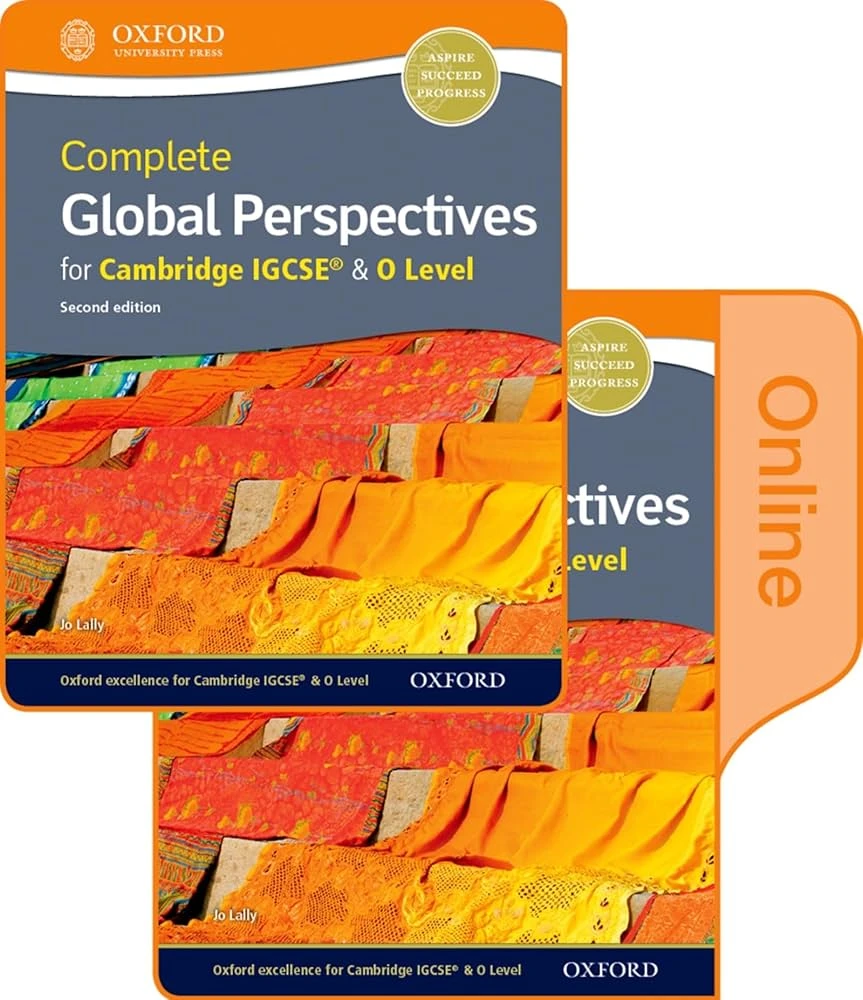
The OUP offering, authored by Karem Roitman, Annette Borchert, and Stuart Wire, takes a slightly different instructional approach. Where the CUP coursebook prioritizes theme-driven inquiry, this endorsed Global Perspectives book excels at breaking down abstract assessment skills into concrete, teachable steps.
Concepts like source synthesis, vested interest detection, and multi-perspective evaluation are each given dedicated, visual instructional sequences. A common mistake we see among students using generic study resources is treating these skills as intuitive rather than as learned procedures with specific techniques. This OUP title corrects that assumption directly.
The book is also explicitly optimized for EAL learners, with clear visual layouts and accessible sentence structures. It includes some of the most practical guidance available for the Individual Report and Team Project components, both of which confuse students far more than the written examination itself.
| Feature | CUP Coursebook (Laycock et al.) | OUP Student Book (Roitman et al.) |
|---|---|---|
| Cambridge endorsement | Yes | Yes |
| Syllabus alignment | Full (0457 and 2069) | Full (0457 and 2069) |
| Primary instructional approach | Enquiry-led, theme-based tasks | Step-by-step skill deconstruction |
| EAL accessibility | Good (language tooltips) | Excellent (visual layout, simple language) |
| Individual Report guidance | Moderate | Strong |
| Team Project guidance | Moderate | Strong |
| Digital access | Yes (Cambridge GO, 2 years) | Depends on edition/retailer |
| Best suited for | Students with a teacher or tutor | Self-study and independent learners |
>>> Read more: IGCSE Geography 0460 books 2026: Complete guide for students and teachers
IGCSE Global Perspectives study guides vs full coursebooks: what to choose
Students often ask whether they need a full Cambridge IGCSE Global Perspectives coursebook or whether a shorter revision guide will suffice. The honest answer depends on where the student is in their learning journey and what gaps they need to fill.
A full coursebook is the correct starting point for any student who is new to the subject or who has significant gaps in their critical thinking and argument analysis skills. The coursebook builds these capacities systematically through repeated practice, and there is no shortcut to that development.
A dedicated IGCSE Global Perspectives revision guide, on the other hand, is most valuable in the final six to eight weeks before examination. At this stage, the student should already understand how to construct an argument, identify bias, and evaluate sources. The revision guide helps consolidate that knowledge and practice under timed, exam-style conditions.
One critical detail often overlooked is that no dedicated standalone revision guide for IGCSE Global Perspectives exists in the same format as, say, the CGP revision guides for IGCSE Sciences. The subject’s skill-based nature makes condensed revision less straightforward. The closest equivalent is the Cambridge Revision Guide series, which some teachers supplement with past paper practice and mark scheme analysis.
Recommended approach by student profile:
- Students beginning Year 10 with no prior exposure: Start with the full CUP or OUP coursebook from the first week of the course.
- Students mid-course with specific skill gaps: Use the OUP coursebook’s targeted chapters on argument skills and source evaluation.
- Students in the final term before exams: Combine past papers with mark scheme annotations, supplemented by specific coursebook chapters.
- Self-study students without a teacher: Prioritize the OUP Complete Student Book for its step-by-step structure.
>>> Read more: IGCSE English as a Second Language ESL 0510 books: Complete guide for students and parents
How IGCSE Global Perspectives books develop critical thinking and research skills
The reason Global Perspectives demands a specialized book rather than a general critical thinking resource is that the Cambridge 0457 assessment framework is very specific about what “critical thinking” means in this context. It is not abstract philosophical reasoning. It is a structured, assessable skillset with defined criteria.
Both leading textbooks align to three core assessment lenses, which every student must internalize before sitting the examination.
Information Skills (Research and Analysis): Students must be able to identify types of evidence, detect vested interests, recognize implicit assumptions within an argument, and map the logical structure of a source. A critical thinking book IGCSE-optimized will use real articles, reports, and data sets to practice these skills, not abstract logic puzzles.
Critical Thinking (Evaluation): This involves comparing conflicting national, global, and personal perspectives on a single issue and assessing the validity and bias of each. The OUP research skills textbook is particularly strong here because it gives students a repeatable analytical framework rather than asking them to reinvent their approach for each new topic.
Metacognition (Reflection and Communication): This is the component that surprises most students. Cambridge expects students to document how their own perspective has shifted as a result of their research, and to collaborate productively within a team to propose practical solutions to real-world problems. Both endorsed books include self-assessment trackers and reflection prompts designed specifically for this requirement.
In our experience working with international students across multiple cohorts, the students who score in Band 1 for the written examination are almost always those who have practiced these three lenses repeatedly using structured book exercises, not simply those who have read widely about global issues.
>>> Read more: Best IGCSE English Literature books 2026: Complete guide for students
Top books and resources for the IGCSE Global Perspectives team project
The Team Project is consistently the component that students and parents underestimate. It carries significant internal assessment weight and requires a fundamentally different set of skills from the written paper. Specifically, it demands collaborative planning, role distribution, evidence synthesis, and a formal presentation or report output, all produced as a group.
One critical detail often overlooked by students using only past papers for preparation is that past papers do not adequately prepare you for the Team Project. You need resources that model the process, not just the output.
The OUP Complete Global Perspectives Student Book provides the most detailed team project resources among the mainstream IGCSE Global Perspectives books currently available. It includes worked examples of project planning documents, guidance on dividing research responsibilities, and annotated samples of what distinguishes a high-band project outcome from a mid-band one.
The CUP coursebook addresses the Team Project as well, though with less granular step-by-step scaffolding. Students using the CUP book for team project preparation should supplement it with the official Cambridge specimen materials and any teacher-produced project planning templates.
Key team project preparation checklist:
- Select a focused local angle on a broad global issue (not a sweeping global problem with no local grounding).
- Assign specific research roles early and document the distribution in writing.
- Use the coursebook’s source evaluation frameworks when assessing team research materials.
- Produce a clear written outcome that includes perspective comparison, evidence citation, and a realistic proposed solution.
- Self-assess using the Cambridge mark scheme descriptors before final submission.
>>> Read more: IGCSE Global Perspectives Report Topic 2026: How to Choose a Clear, Relevant, and Manageable Idea
Where to buy IGCSE Global Perspectives books at the best price
Students and parents across Asia, the Middle East, and Africa frequently ask where to buy IGCSE Global Perspectives books reliably and affordably. The landscape of purchasing options varies significantly by region.
Official and primary sources:
- Cambridge University Press direct webstore: Offers both physical and digital bundles for the CUP coursebook, with Cambridge GO access included.
- Oxford University Press Southeast Asia: Regional distributors often stock the OUP Complete Student Book at localized pricing.
- Amazon (global and regional): Available in most markets, though verify the edition before purchasing to ensure it covers the current syllabus.
Regional and school-based sources:
- Many international schools that follow the Cambridge curriculum maintain a school bookstore or a recommended supplier list. Checking with the school coordinator first can often secure discounted rates or second-hand copies in good condition.
- In Vietnam, Singapore, Malaysia, and Indonesia, educational book distributors such as MPH Bookstores (Malaysia), Kinokuniya (Singapore), and local academic publishers often carry both titles.
A common mistake we see is students purchasing older editions of the coursebook because they appear at a lower price online. The Second Edition of the CUP coursebook contains updated tasks, revised global themes, and alignment with the current 0457 assessment objectives. Older editions may not reflect these changes.
| Purchase channel | Physical copy | Digital access | Regional availability |
|---|---|---|---|
| CUP official website | Yes | Yes (Cambridge GO) | Global |
| OUP official website | Yes | Varies | Global |
| Amazon | Yes | No | Global (verify edition) |
| International school bookstore | Yes | Varies | Local |
| Regional academic distributors | Yes | No | Asia, Middle East |
>>> Read more: IGCSE Global Perspectives Argument Structure : PEEL+ for A*
Free IGCSE Global Perspectives resources vs investing in a dedicated study book
The internet offers a significant volume of free resources for Cambridge 0457, including past papers, specimen materials, examiner reports, and student blogs. It is reasonable to ask whether a student truly needs to invest in a dedicated IGCSE Global Perspectives book.
The honest answer is this: free resources are necessary but not sufficient. Past papers are essential practice tools, but they do not teach you how to approach a question for the first time. Examiner reports tell you what went wrong in previous cohorts but do not give you the scaffolded practice to avoid those same errors. A global issues study guide or coursebook fills exactly this gap by providing structured instruction before you attempt examination-style practice.
Drawing on years of experience at Times Edu, we have observed that students who rely exclusively on free resources tend to plateau at the mid-grade band. They understand the topics but lack the precise skill vocabulary and technique to push into the highest marks. The difference between a student who scores a B and a student who scores an A* in Global Perspectives is almost always a question of analytical precision, and that precision is built through the kind of guided, incremental practice that a quality self-study Global Perspectives book provides.
That said, free resources absolutely have a role to play. The Cambridge syllabus document (freely downloadable) defines every assessment objective. Past papers from the Cambridge Assessment International Education website are indispensable for examination practice. Examiner reports, also free, reveal exactly which question types generate the most lost marks. These should form the backbone of any examination preparation plan, used alongside, not instead of, a structured coursebook.
>>> Read more: IGCSE books 2026: The complete guide to choosing the right study materials
Frequently asked questions
Which IGCSE Global Perspectives book is officially endorsed by Cambridge?
Is there a dedicated revision guide for IGCSE Global Perspectives?
What is the best book for developing argument and research skills in IGCSE Global Perspectives?
Does any IGCSE Global Perspectives book cover the team project component in depth?
Can I prepare for IGCSE Global Perspectives without a dedicated coursebook?
Are older editions of IGCSE Global Perspectives books valid for the current syllabus?
Which IGCSE Global Perspectives book is best suited for self-study students?
Conclusion
At Times Edu, we specialize in supporting IGCSE, A Level, IB, and AP students with exactly this kind of strategic, personalized academic guidance. If your student is beginning Global Perspectives, struggling with the Team Project or Individual Report, or aiming to push from a B to an A or A*, our subject specialists can build a structured study plan tailored to their specific needs and examination timeline.
Reach out to Times Edu today to book a personalized academic roadmap consultation and give your student the clearest possible path to their target grade.